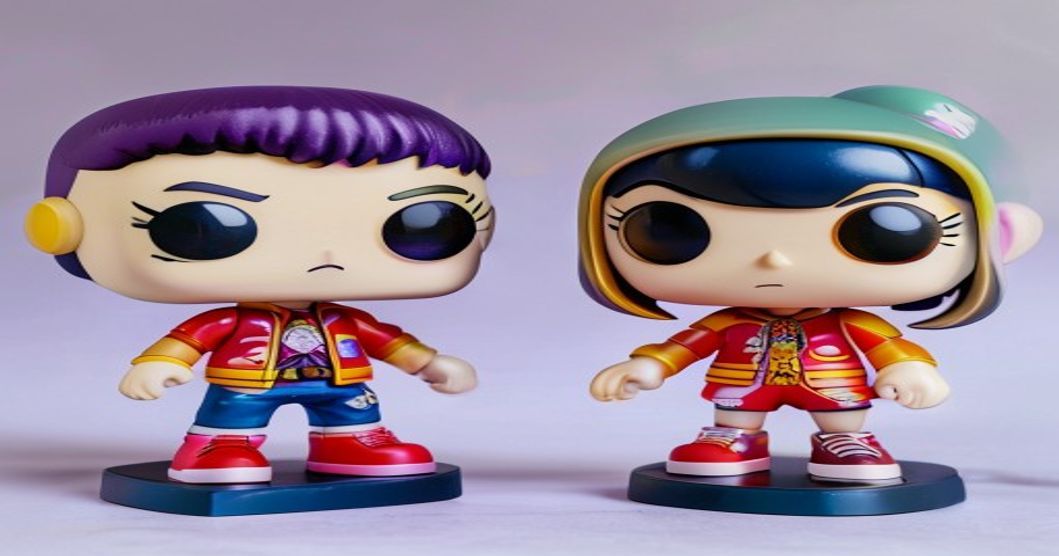
The question comes up constantly in collector communities: should I start with Funko Pops, or dive into gashapon? Both formats are globally popular, both occupy the same shelf space and psychological niche (affordable collectible figures of IP you love), and both have passionate communities behind them. But beneath those surface similarities are deep structural differences in pricing, quality, community, investment potential, and the fundamental collecting experience. This guide is the direct comparison.
For anime/Japanese IP: gashapon wins on quality, price, and depth of character coverage. For Western IP (Marvel, DC, Disney, sports): Funko Pop wins on breadth and accessibility. For investment potential: gashapon secret rares outperform standard Funko Pops significantly. For gifting and accessibility: Funko Pop wins on brand recognition.
Price Comparison: Per Figure vs. True Cost of Collecting
The sticker price tells only part of the story. A Funko Pop in Spain retails at €12–€15 for a standard figure. A gashapon pull costs €3–€5 through Spanish importers. At face value, gashapon is 3–4× cheaper per figure. But gashapon collecting involves the randomization element — you may need 3–5 pulls to get the specific figure you want from a set, which changes the effective cost per desired figure to €15–€25.
However: Funko Pop collecting has its own cost multiplication. Limited exclusives, retailer variants, and convention specials push many collectors into spending €20–€40 for "must have" variants. The total annual spend for moderately active collectors of each format is remarkably similar — approximately €150–€350/year per category tracked in a 2024 Popculture Market survey of 2,800 respondents. The cost difference is less dramatic in practice than the per-unit sticker price suggests.
Where gashapon wins on price
If you are happy with any figure from a set — or if you buy secondhand from platforms like Wallapop or Vinted — gashapon deliver significantly more figure per euro. A complete 7-figure Bandai HG set bought secondhand from Spanish collectors costs €18–€28. Seven Funko Pops from Fnac would cost €85–€105.
Where Funko Pop wins on price
Funko Pops have no randomization. You pay €12–€15, you get the exact figure shown on the box. For collectors who hate the duplicate problem of gashapon and want precise inventory control, Funko Pop's fixed-price, no-surprise model is genuinely more economical.
Sculptural Quality: The Most Honest Comparison
This is where the comparison gets unambiguous. Modern Bandai HG and DX gashapon figures — the kind produced for Dragon Ball, One Piece, Demon Slayer, and similar IPs — are not in the same quality tier as standard Funko Pops. Bandai's capsule figures use character-accurate proportions, separately-injected translucent effect parts, hand-applied paint detailing, and pose-specific sculpting that makes each figure visually dynamic. Funko Pops use a unified aesthetic formula (oversized head, minimal features, standardized proportions) that is instantly recognizable but deliberately sacrifices character fidelity.
This is not a bug in Funko Pop's design — it is the feature. The Funko aesthetic creates visual consistency across thousands of IP licenses, which is why a collector can display Spider-Man, Darth Vader, and Bilbo Baggins next to each other and have them look like a coherent set. Gashapon figures don't have this aesthetic coherence across IPs — a Dragon Ball figure next to an Evangelion figure next to a Demon Slayer figure looks like three figures from different design schools, because they are.

Resale Value: Which Appreciates?
Both formats have significant resale markets, but the value dynamics are structurally different.
Funko Pop resale: The vast majority of Funko Pops depreciate to 40–60% of retail within 12 months. The exceptions — Comic-Con exclusives, 1-of-1 variants, and "vaulted" releases — can appreciate dramatically, but these are statistical outliers. PopPriceGuide data shows that of approximately 20,000 unique Funko Pop SKUs, fewer than 500 trade consistently above double retail. The average Funko Pop collector's portfolio has negative real return.
Gashapon resale: Standard common figures from current production runs hold 70–85% of retail value for 18–24 months. Secret rare variants from major IPs (Dragon Ball, One Piece, Demon Slayer) consistently appreciate 20–40% annually once out of production. A Dragon Ball HG Vol. 14 Ultra Instinct Goku secret rare bought at ¥400 (~€2.50) from a Japanese machine now trades for €55–€75 — a 22–30× return. These are not exceptional outliers; secret rare appreciation is the norm in major IP gashapon series.
The investment math clearly favors gashapon for serious collectors who target secret rares from enduring IPs. For casual collectors focused on display rather than resale, the calculation is neutral.
IP Coverage: Where Each Format Dominates
Funko Pop's licensing catalogue is unmatched in Western pop culture: every Marvel character, every Star Wars variant, every Disney film, US sports teams, musicians, TV shows, games. Funko holds over 1,000 active licenses. If you collect Western IP primarily, gashapon cannot compete on coverage.
Gashapon's dominance is in Japanese IP: every Bandai-licensed shonen anime (Dragon Ball, One Piece, Naruto, Bleach, My Hero Academia, Demon Slayer, Jujutsu Kaisen and hundreds more), Takara Tomy's mecha lines (Transformers, Zoids), Kaiyodo's Revoltech and Capsule Q figures covering ecological subjects, architecture, and vehicles alongside anime. The depth of character coverage in anime capsule toys surpasses anything Funko produces — Bandai alone makes gashapon of secondary One Piece characters that Funko has never and likely will never license.
Community: Where to Find Other Collectors
Both formats have strong communities, but with different geographic concentrations and different platforms. Funko Pop communities are primarily US-centric, active on Reddit (r/funkopop, 1.2M members), Facebook groups, and Pop Price Guide. Gashapon communities are globally distributed, active on r/gashapon, Twitter/X (particularly Japanese accounts), and Discord servers organized by IP (dedicated Dragon Ball, One Piece, and general capsule toy servers each have 10,000–50,000 members).
In Spain specifically, the gashapon collector community has grown significantly since 2022, with active groups on Telegram, WhatsApp, and at events including Japan Weekend Madrid and Barcelona's Japan Festival. The Funko Pop community in Spain is comparable in size but more concentrated around Fnac retail events and Facebook trading groups.
Verdict: Which Should You Collect?
Collect gashapon if you primarily love anime and Japanese pop culture, value sculptural quality over aesthetic consistency, enjoy the randomized pull experience as part of the hobby, and have a long-term interest in building a collection with real secondary market value.
Collect Funko Pops if your primary IP interests are Western (Marvel, Disney, sports, music), you want zero randomization in your purchases, you value the recognizable aesthetic that makes Funko Pops immediately legible as collectibles to non-collectors, and you prefer a retail-friendly format available in mainstream stores.
Collect both if you have broad IP interests across Eastern and Western pop culture — many serious collectors do exactly this, separating their displays by aesthetic region. The two formats are not competitors in any practical sense; they serve different IP niches and different collecting temperaments.
New to capsule toys entirely? Start with our complete guide to what gashapon are and how they work. Already collecting and want to start building smarter? Our how to start collecting gashapon guide covers budgeting, sourcing, and community resources. And if you want to know which specific series to prioritize, the 25 best anime gashapon of 2026 is the definitive ranked list.