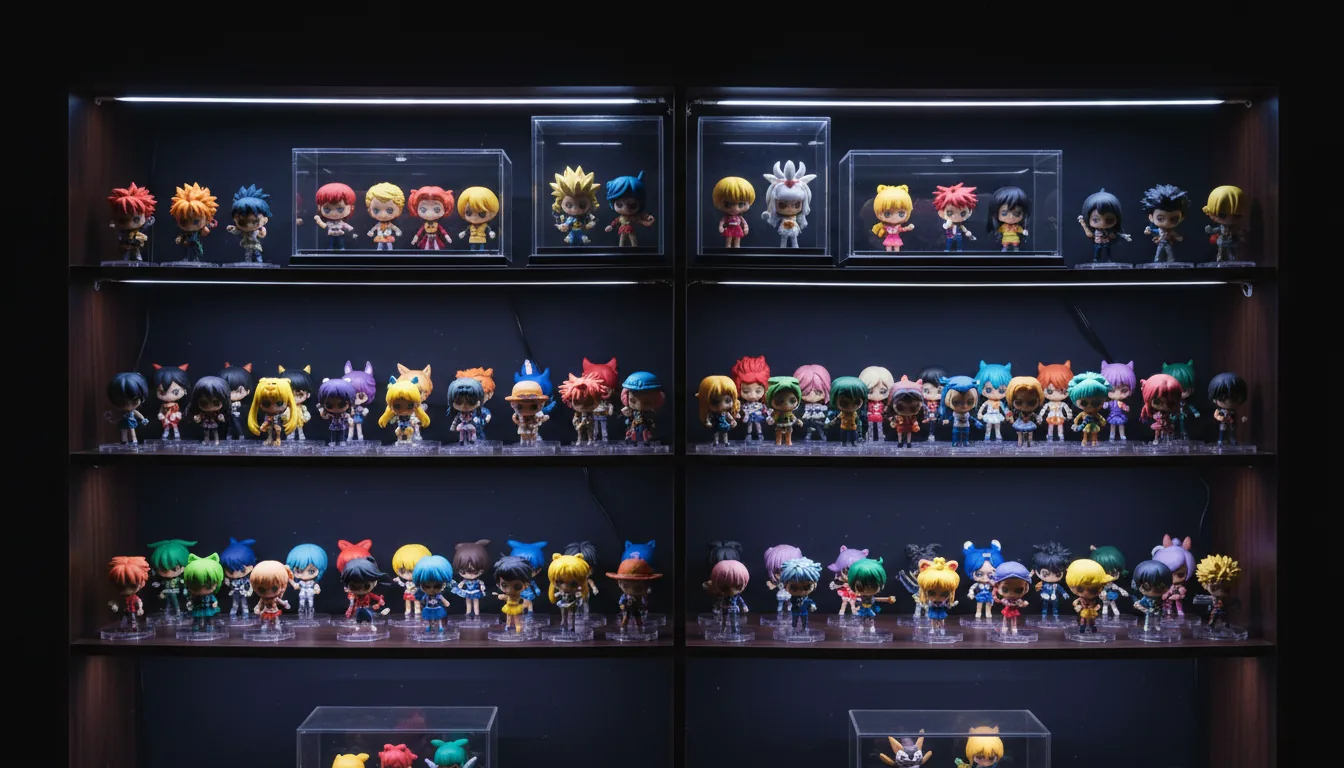
1. The IKEA DETOLF Glass Cabinet — The Collector's Standard ($99–$150)
Ask any dedicated figure collector what display they use, and a significant portion will say DETOLF. IKEA's glass display cabinet has become the de facto standard for serious gashapon and figure collectors worldwide — and for good reason. Four glass shelves, transparent panels on all four sides, a clean minimalist aesthetic, and a price point that doesn't require apologizing: $99 for the base unit.
The DETOLF's dimensions (16.5" wide × 63" tall × 16.5" deep) hold a significant collection. With four shelves, you have display space for 80–150 small gashapon figures depending on arrangement. The glass panels allow 360-degree visibility, meaning figures on any side look good from any angle in the room.
Upgrades that make the DETOLF genuinely special: LED strip lighting transforms the presentation dramatically. The most popular solution is an LED strip kit designed specifically for the DETOLF (search "DETOLF LED kit" on Amazon, $15–$40), which mounts to the shelf underside and provides even top-down lighting. Third-party acrylic risers cut to DETOLF shelf width ($20–$45) add height variation that prevents the flat-row look.
Setup tips: assemble the DETOLF on its final wall location before filling — it's awkward to move when loaded. Use earthquake putty (Museum Putty or 3M Command Strips) to secure the base to the wall stud, as a fully loaded DETOLF is a safety consideration. Add a mirror back panel (cut a mirror tile to size, $10–$20 from hardware stores) to double the visual depth and make the display feel twice as full.
The DETOLF's only significant limitation is shelf height — the standard shelves allow about 10–12 inches of clearance, which accommodates most gashapon figures (typically 3–7cm tall) with room to spare, but limits displaying larger prize figures alongside capsule toys. DETOLF shelf spacing can be adjusted by repositioning the shelf pins, giving you customizable clearance heights.
2. LED Strip-Lit Floating Shelves — Best Value for Impact ($30–$80 per shelf)
If you can only install one display solution, LED-backlit floating shelves deliver the highest visual impact per dollar of any option on this list. The combination of shelf space, wall mounting, and subtle LED lighting creates a professional collector's aesthetic that photographs beautifully and looks impressive in any room.
The setup: standard floating shelves (IKEA Lack shelves at $9 each, or IKEA Bergshult/Pershult for a more premium option at $30–$50) with a strip of LED tape light mounted to the underside or back. Warm white (2700K–3000K) gives a gallery feeling; RGB lets you match your room's color scheme or your collection's color palette.
LED strip options: TP-Link Kasa or Govee smart LED strips ($15–$35 for 5m) give app control, voice control (Alexa/Google), and scene settings. Non-smart basic LED strips cost $8–$15 and require a physical switch. For a shelf-specific look, Govee's "TV backlight" strips are the right width and brightness for shelf backlighting.
Arrangement principle for floating shelves: stagger your figure heights across the shelf using risers so that no figure hides behind another. Create depth by placing taller or more important figures at the back (on risers) and smaller ones at the front. Group figures by series, color, or emotional tone — don't mix chaotic arrangements unless that's intentional.
3. Acrylic Riser Pyramid — Maximize Any Shelf ($8–$30)
Acrylic risers are the single most impactful and inexpensive upgrade to any display. A set of graduated acrylic steps — available in 2, 3, 4, or 5 tiers — lets you see every figure in a row rather than having back rows disappear behind front rows. For gashapon specifically, where figures average 5–8cm tall, risers with 2–3cm step height increments work perfectly.
Where to buy: Amazon carries multiple brands (Vkeid, Niubee, Songmics) in clear acrylic starting at $8 for a 2-step set and $15–$30 for 4–5 step sets. eBay and AliExpress have even cheaper options if you're willing to wait on shipping. Custom cut-to-size acrylic risers from local plastic suppliers or online services (like TAP Plastics or ePlastics) cost more but can be sized exactly to your shelf dimensions.
Color choice matters: clear acrylic is the most versatile and universally flattering — it disappears visually and lets the figures read as floating. Black acrylic reads as a dramatic podium display. White acrylic creates an airy, retail-store feel. Mirror acrylic doubles the visual density of your collection and is particularly striking with LED lighting from above.
For gashapon figures specifically, a 5-step riser on a 12-inch deep shelf creates 5 rows of visibility with no figure fully hidden. This is the single most effective arrangement for showing a complete series at a glance — all figures visible, organized, impressive.
4. Shadow Box Framing — Perfect for Completed Series ($20–$60)
Shadow boxes — deep picture frames with a cavity designed for three-dimensional objects — are ideal for displaying complete series of small gashapon figures as a unified art piece. A 12" × 16" shadow box can typically display 12–20 gashapon figures arranged in a grid or scene, and hung on a wall creates a collector's trophy that's both display and art.
IKEA's SANNAHED shadow box ($15 for 10" × 12") and Michaels' Uniek shadow boxes ($20–$45 for various sizes) are popular options. Deep shadow boxes (3 inches of interior depth) work best for gashapon figures — most gashapon figures are 2–4cm deep and need the clearance to sit flat on the shadow box floor without the glass pressing them.
Mounting figures inside: use museum putty or small dots of removable adhesive to position figures on the shadow box backing. Custom backing paper (decorative washi paper, kraft paper, or printed art matching your series theme) transforms the display from functional to genuinely beautiful. A Demon Slayer gashapon series displayed on a Japanese woodblock print pattern backing is a visual statement piece.
Shadow boxes work best for small, complete sets (6–20 figures) rather than large ongoing collections. They're particularly appropriate for limited edition or chase-heavy series where you want to celebrate the completed set permanently.
5. Tiered Spice Rack Repurpose — Hidden Gem ($15–$40)
Tiered bamboo or metal spice racks — sold in every kitchen section of every home goods store — are secretly excellent gashapon display solutions. A 3-tier countertop spice rack creates a stadium-seating arrangement where every row is fully visible, the compact footprint fits on any desk or shelf, and the $15–$25 price point is accessible to any budget.
Countertop spice racks work particularly well for small gashapon figures (under 6cm) and create an organized grid display that shows series completeness at a glance. The IKEA Variera kitchen organizer ($4–$10) and Bamboo Shelf step organizers from Amazon ($15–$25) are excellent candidates.
6. Wall-Mounted Floating Display Cubes — Modular and Expandable ($15–$50 each)
Individual floating wall cubes — square shelves with an enclosed back and sides — create modular display units that can be arranged in any pattern on a wall. Each cube becomes its own micro-display for a series, character grouping, or thematic collection. The arrangement on the wall itself is a design element.
IKEA Eket ($20–$35 per cube) and Kallax inserts ($30–$70) are the most popular options. Third-party floating cube shelves from Amazon, Target, or Walmart start at $15–$20 for smaller units. For a dramatic wall installation, arrange 9–16 cubes in a grid and use LED strip lighting inside each cube for a gallery installation effect that photographs spectacularly.
7. Thematic Diorama Builds — Maximum Creativity (Variable Cost)
For collectors who are also makers, thematic dioramas take gashapon display from storage to storytelling. A diorama is a miniature scene — a Japanese convenience store interior, a park bench in autumn, a rainy city street — in which your gashapon figures are placed as characters in a scene. The result is photography-ready art that brings the figures to life.
Scale consideration: most gashapon figures are 1:12 to 1:18 scale, meaning a 6cm figure represents a roughly 72–108cm human. Diorama elements at 1:12 scale (a very common miniature scale) are perfect companions. Sources for 1:12 scale diorama elements: Re-Ment (a Japanese miniature brand available on AliExpress), Amazon for generic miniature furniture, and 3D printed elements from Thingiverse.
The most popular diorama backdrops for gashapon: urban Japanese scenes (convenience stores, train platforms, ramen shops), nature settings (forest floors, cherry blossom paths), and the increasingly popular "tiny room" format where figures appear to inhabit a cozy, perfectly detailed interior space. Instagram and Pinterest are rich with inspiration from dedicated gashapon and figure photographers who have perfected the diorama display art form.
8. Dedicated Display Tower ($80–$250)
Purpose-built figure display towers — sold by brands like Detolf alternatives, Mebbay, or Umbra — are glass or acrylic column displays designed specifically for collectibles. They typically offer 5–7 shelves in a narrow vertical footprint, making them ideal for desk corners or spaces too narrow for a DETOLF.
The Mebbay display case with LED lighting ($80–$130 on Amazon) has become popular specifically in the gashapon community for its built-in LED, multiple shelves, and glass construction that provides DETOLF-like display quality in a smaller footprint. For a desk or shelf placement where a full cabinet is too large, a dedicated display tower is the right solution.
9. Custom Backdrop + Shelf — Photography-First Setup ($20–$80)
Collectors who prioritize social media photography often build display setups designed primarily for camera angles rather than daily viewing. The custom backdrop setup: a painted foam board, vinyl print, or fabric backdrop positioned behind a simple shelf creates a controlled photography environment where you can shoot any figure with consistent, attractive background context.
Popular backdrop options: pastel solid colors (popular for cute/Sanrio series), urban scene prints (for streetwear-adjacent or sci-fi series), Japanese pattern paper (for traditional-style gashapon), and simple gradient prints. Backdrops from photography suppliers on Amazon start at $10–$25 for 5' × 7' collapsible options.
10. Under-Desk LED Display Shelf ($25–$70)
The space under a raised monitor stand or along the back wall of a desk is prime gashapon real estate. A thin LED-lit shelf designed for desk setups — sold by brands like Yecaye, Grovemade, or generic LED "gaming desk shelves" — positions figures at eye level during screen time and creates an atmospheric desk setup that reads well in streaming and content creation contexts.
This approach has exploded in popularity among content creators and streamers who want their figure collections visible in their broadcast background. The combination of RGB lighting, compact shelving, and camera-friendly positioning makes the under-monitor shelf the preferred display method for the YouTube and Twitch creator demographic.
11. Bookcase with Risers — Maximum Capacity ($0–$150)
For large collections (100+ figures), a standard bookcase with dedicated figure shelves using acrylic risers is the highest-capacity solution. A Billy bookcase (IKEA, $60–$120 depending on width) with five shelves and 4-tier acrylic risers on each shelf can display 150–300 small gashapon figures with full visibility. Add curtains or panel doors to protect from dust while maintaining aesthetic appeal.
12. Display Dome Grouping — Boutique Aesthetic ($10–$40 per dome)
Glass or acrylic display domes — traditionally used for taxidermy, botanical specimens, or decorative objects — create a beautiful boutique aesthetic for small gashapon figure groupings. A 6-inch diameter dome placed over a themed scene of 3–5 figures creates an immediate focal point that feels more like a gallery piece than a toy collection.
Domes from Amazon range from $10 for small acrylic options to $30–$40 for quality glass with wood base. Arrange a scene on the wood base (forest diorama, miniature rock garden, colored sand), position 3–5 thematically related figures, and place the dome. The enclosure also provides dust protection, making it both display and preservation solution.
13. Series-Organized Drawer Unit — Storage + Display ($30–$100)
For collectors who prefer organization over continuous display, a shallow drawer unit with labeled drawers — one series per drawer — keeps collections organized and accessible without requiring wall or shelf space. IKEA Alex drawer units and Muji acrylic drawer sets are popular choices. Label each drawer by series and maintain an index of what's where.
This is less visually impressive than other display methods but excellent for managing very large collections or for collectors in limited spaces. A hybrid approach — one statement display shelf for your favorite 20 pieces, a drawer unit for the rest — is the most practical long-term solution for serious collectors.
14. Art Ledge Row Display — Simple and Elegant ($15–$40)
Art ledges — shallow wall-mounted rails with a small front lip that holds objects in place — create a clean, gallery-style linear display that works beautifully for uniform-height gashapon series. IKEA Mosslanda picture ledges ($8–$15 each) are the most popular, and a double row of ledges (one at eye level, one below) creates a two-row display that reads as intentional and curated rather than cluttered.
15. Convention-Ready Portable Display Case ($40–$150)
Collectors who attend conventions, trade meets, or gashapon exchange events need portable display solutions that protect figures in transit and create an attractive presentation table. Aluminum-framed acrylic display cases with foam interiors ($40–$100 on Amazon) protect figures from jostling while creating a showroom-quality table display at events. Combined with a portable LED battery strip, these create professional-looking setups at any venue.
Organizing Philosophy: How to Think About Your Collection
The way you organize your gashapon collection says a lot about how you relate to it — and poor organization is one of the main reasons collections feel overwhelming rather than joyful.
Organize by series first: Gashapon are designed as sets. A complete series of 8 Kitan Club Cat Life figures displayed together has far more visual impact than 8 figures from 8 different series on the same shelf. Series organization also makes gaps visible — you can see at a glance which figures you're still hunting.
Size hierarchy: Arrange figures within a group from tallest (back) to shortest (front) to ensure all figures are visible. The stepped arrangement is visually pleasing and practically functional. Use risers to create this hierarchy even when figures are similar heights.
Color blocking: Group series with similar color palettes near each other for a visually cohesive display. This is particularly effective with cute/pastel series like Sanrio figures or food miniatures, where color coordination creates a satisfying aesthetic harmony.
The edit: One of the hardest things for collectors to accept is that display space should be curated, not maximized. Crowding every figure onto every available surface dilutes the impact of your best pieces. Accept that storage exists for reasons — some figures are bench players, not starters. Your rotating display should feature your favorite series and rarest pieces, with the rest in organized storage.
Photography for Social Media: Getting Your Collection Camera-Ready
The gashapon community on Instagram, Twitter/X, and TikTok is visually driven — great photography turns your collection into social content that connects you with fellow collectors. You don't need professional equipment, but a few techniques make a dramatic difference.
Lighting is everything: Natural window light from the side creates soft, even illumination that flatters all figure colors. LED ring lights create the flat, even look common in collection shots. LED strip backlighting from below or behind creates dramatic gradient effects popular in figure photography. Avoid overhead room lights, which cast harsh shadows from above.
Macro for detail shots: Gashapon figure detail is remarkable up close. Use your phone's portrait mode or a macro lens clip (Amazon, $10–$20) to capture the sculpting detail that makes series like Kitan Club's Miniature Life figures so impressive. Manual focus (tap to focus on your phone) gives you precise control over which element is sharp.
Backgrounds: Clean, uncluttered backgrounds keep focus on the figures. A single color backdrop (foam board from a craft store, $3–$6), a natural texture (wood grain, marble contact paper, Japanese paper patterns), or a diorama scene all work well depending on your aesthetic. Avoid backgrounds that compete with your figures.
The reveal photo: Gashapon culture has an established social media format: the "reveal" — capsule in hand, then open, then figure revealed. This format drives engagement because it recreates the unboxing experience for viewers. Many collectors build dedicated photography nooks specifically for this format, with consistent branding, lighting, and backgrounds.
Protecting Your Collection from UV, Dust, and Humidity
Gashapon figures are made from PVC and ABS plastic with paint finishes that are vulnerable to three main enemies: ultraviolet light, dust accumulation, and humidity. Serious collectors address all three.
UV protection: Direct sunlight is the most destructive force in any figure collection. UV radiation fades paint (reds and yellows first), degrades PVC (causing it to yellow and become brittle over years), and can warp figures exposed to temperature swings. Keep all displays away from windows with direct sun exposure. UV-filtering window film ($15–$40 for a window panel) is a worthwhile investment in rooms that receive significant daylight. Glass cases provide meaningful UV protection; open shelves do not.
Dust management: Dust accumulates on every horizontal surface constantly. Enclosed glass cases (DETOLF, display towers) provide the best protection, reducing cleaning from weekly to monthly. Open shelves require regular dusting with a soft brush (makeup brushes work well for figure detail areas) and occasional compressed air for crevices. Microfiber cloths work for larger figures; avoid paper products which can scratch painted surfaces.
Humidity control: High humidity (above 70% relative humidity) accelerates PVC degradation, encourages paint oxidation, and can cause mold in porous base materials. In naturally humid climates (coastal regions, basements), silica gel desiccant packets placed in enclosed display cases maintain appropriate humidity levels. Small electronic dehumidifiers ($20–$40) are worth using in dedicated collection rooms in subtropical climates. Avoid basements and bathrooms as primary collection spaces.
Pest prevention: Silverfish and certain insects feed on plasticizer in PVC figures, causing surface damage. Enclosed cases prevent access. Mothballs are effective but smell unpleasant; cedar blocks are a more collector-friendly alternative. Regular inspection of your collection — particularly in storage boxes — catches problems early.