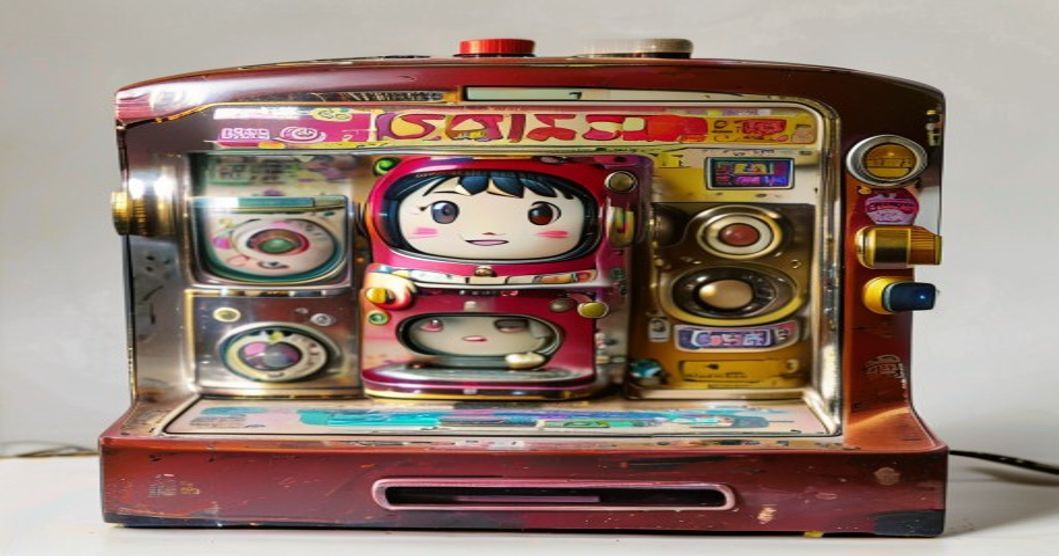
The gashapon machine is older than the Sony Walkman, older than the VHS tape, older than the term "otaku" itself. When Bandai installed their first coin-operated capsule toy dispensers in Japan in 1965, the anime industry that would eventually define gashapon collecting didn't exist yet. Dragon Ball wouldn't be drawn for another 19 years. Akihabara was still primarily an electronics district. And yet the format was already containing within its simple mechanism — coin in, handle turned, capsule received — the entire logic of what would become one of the most psychologically sophisticated consumer products of the 20th century.
This is the history of gashapon: not just a product timeline, but the story of how a novelty machine became embedded in Japanese culture at every level, from childhood memories to investment-grade collecting, and how it exported that cultural weight globally over six decades.
ガシャポン is a portmanteau of two onomatopoeic sounds: ガシャ (gasha) — the cranking of the machine handle — and ポン (pon) — the capsule dropping into the tray. The name literally describes the two sounds of using the machine. Bandai registered "Gashapan" (later "Gashapon") as a trademark in 1977; it became the generic term for all capsule toys in Japan, regardless of manufacturer — similar to how "Xerox" became a verb for photocopying.
Origins: The American Inspiration, 1960s
The direct ancestor of the Japanese gashapon machine was the American "quarter machine" — coin-operated dispensers selling small plastic toys and novelties that appeared in US supermarkets and gas stations in the 1950s. Bandai executives traveling to the United States in the early 1960s observed these machines and recognized their potential in the Japanese market, where vending machine culture was already deeply established (Japan had coin-operated sake and cigarette dispensers in public locations from the postwar era).
The critical Japanese adaptation was quality. American quarter machines dispensed cheap plastic rings, erasers, and charms with no particular artistic merit. Bandai's insight was to treat the dispensed item as a miniature product deserving real design attention — not a gumball machine throwaway but a small object worth keeping. This quality philosophy, which seems obvious in retrospect, was the distinguishing decision that gave Japanese capsule toys their trajectory.
The first Bandai capsule machines appeared in 1965, initially stocked with small plastic figures of animals, vehicles, and characters from children's television. The machines were placed in toy stores, supermarkets, and department stores. The ¥10 price point (equivalent to roughly 3 US cents at the time) was accessible to primary school children, and the format became immediately popular.
Bandai's Trademark and the Format's Maturation, 1977
By 1977, Bandai had recognized that "gashapan" — the onomatopoeic name children were already using for the machines — was trademarking-worthy. The formal trademark registration in 1977 coincided with significant product development: Bandai introduced the first distinctly collectible capsule toy sets in this period, moving beyond single-figure releases to coordinated themed sets where the collecting value was in assembling a complete group rather than any individual figure.
This transition from novelty to collectible was crucial. It transformed the machine from a one-time amusement to an ongoing relationship — once a child had pulled two figures from a five-figure set, the motivation to complete the set was established. The set structure, now standard in all gashapon production, was Bandai's invention and their most significant contribution to the format's psychology.
The Anime Boom and Gashapon's First Golden Age, 1980s
The 1979 premiere of Mobile Suit Gundam and the subsequent anime boom of the early 1980s transformed gashapon from a children's novelty into an anime merchandise category with adult appeal. When Dragon Ball premiered in 1984 and Akira released in 1988, Bandai's capsule toy division was already producing licensed figures for both — and a new type of collector emerged: the adult who wanted miniature representations of anime characters as keepsakes and display objects, not toys to play with.
The first Dragon Ball gashapon sets (1986–1988) are considered by historians of the hobby as the foundational moment of anime gashapon collecting as a serious adult practice. These were crude by modern standards — simple PVC figures with minimal paint detail, at scales much smaller than today's HG figures — but they established the precedent: pay a small amount, receive a miniature representation of a beloved character, display it as a cultural artifact.
By 1990, Bandai was producing over 200 distinct capsule toy series annually. The variety was extraordinary: not just anime figures but miniature food replicas, architecture models, animal studies, historical figures, and vehicles. The non-anime categories — particularly the miniature food and everyday objects series — created a second gashapon market distinct from anime collecting: the appreciation of Japanese capsule toys as objects of craft and humor in themselves.
Akihabara and the Geography of Gashapon Culture, 1990s–2000s
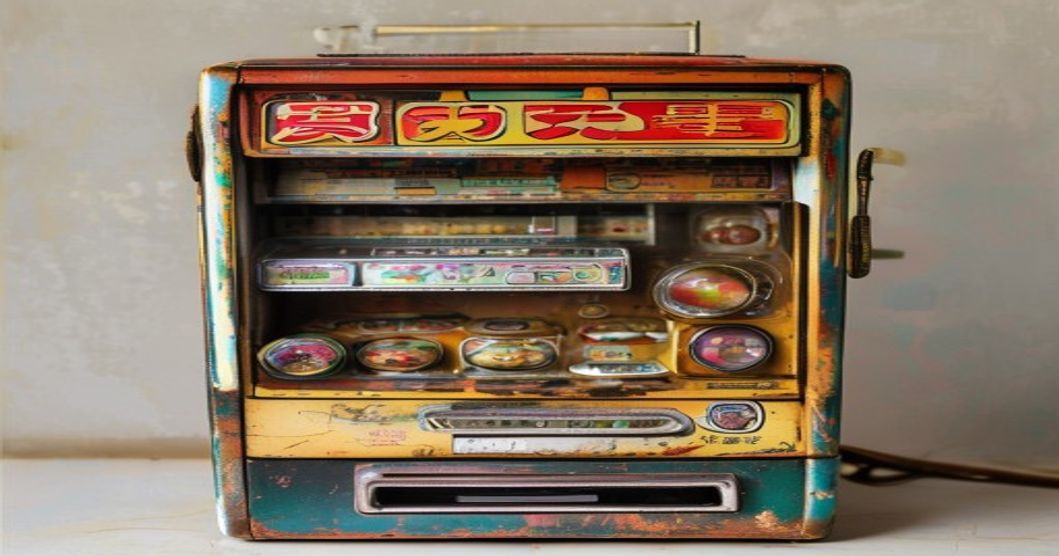
The 1990s saw gashapon machines migrate from supermarkets and toy stores to a new habitat: the electronics and anime merchandise district of Akihabara in Tokyo. Akihabara's transformation from electronics market to otaku culture center occurred gradually from the mid-1990s, and gashapon machines were a defining visual element of that transformation. By 2000, Akihabara's side streets were lined with hundreds of machines — a visual density that became, globally, the iconic image of Japanese geek culture.
This geographic concentration had cultural consequences. Gashapon became associated with the Akihabara social ecosystem: collectors who made pilgrimage purchases, figures used as conversation objects in the otaku social circles that organized around the district, and the development of specialty shops dedicated to buying, selling, and trading secondhand gashapon figures. The secondary market for gashapon — which is now a multi-million-dollar global industry through Yahoo Japan Auctions and Mercari — was born in Akihabara's specialist shops in the 1990s.
For travelers wanting to experience this geography firsthand, our Akihabara guide covers the district's current gashapon landscape, including the Bandai Official Shop with over 400 active machines.
Global Expansion and the Modern Era, 2010–2026
The global expansion of gashapon began gradually in the 2010s with Japanese cultural export policies, anime streaming (Netflix and Crunchyroll making anime accessible globally), and social media platforms that gave international collectors visibility into Japanese collecting culture. The critical acceleration came in 2020–2021, when COVID-19 lockdowns drove global interest in hobbies and the K-Pop/anime fandom explosion created new entry points for young collectors outside Asia.
By 2024, Bandai's capsule toy division was reporting significant international revenue growth — approximately 25% year-over-year for three consecutive years — driven primarily by Spain, France, Germany, Australia, and Southeast Asian markets. The Japan Capsule Toy Industry Association (JCTIA) estimates that approximately 700 million capsule toy units are sold annually in Japan alone, with global volume at approximately 1.5–2 billion units across all markets.
The global capsule toy market was valued at approximately $15 billion USD in 2024. China has become the fastest-growing market, with domestic producers (52Toys, Kayou, Bandai's China operations) capturing significant share of the domestic market while Bandai's IP-licensed figures continue to command premium positioning.
What Comes Next: Gashapon in the AI and Digital Era
The most significant development in gashapon's immediate future is the integration of digital components with physical capsule toys. Bandai and several competitors have introduced capsule sets with NFC chips embedded in figures, unlocking digital content (character profiles, mini-games, augmented reality displays) when tapped to a smartphone. This "phygital" approach attempts to connect gashapon to the digital-native behavior patterns of younger collectors.
Sustainability is the other major challenge. A standard gashapon capsule is approximately 40g of polypropylene plastic per pull, and at 700 million annual Japanese sales, that represents approximately 28,000 metric tons of plastic per year in Japan alone. Bandai launched a capsule recycling initiative in 2022 (collection bins in major Gashapon Bandai Official Shop locations), and several manufacturers are testing recycled-material capsule alternatives. The ecological dimension of the hobby is increasingly part of serious collector discourse. Our gashapon sustainability guide covers the current state of industry efforts.
For the complete collector's perspective on where gashapon culture lives today — the shops, the conventions, the online communities — see our Japan gashapon culture guide. And if you want to understand the basics of the format before diving into its history, our what is gashapon guide is the essential first read. For those just starting out, the guía para principiantes de gashapon walks through exactly how to begin your collection step by step.
The modern era has also given rise to the designer vinyl figure movement — brands like Pop Mart with their Labubu and Sonny Angel lines that share gashapon's blind-box mechanic but operate in a different collector segment. See our Labubu vs Sonny Angel 2026 comparison for how these contemporary collectibles relate to the gashapon tradition.