Why Authentication Matters Right Now
Labubu — the goblin-rabbit character designed by Kasing Lung for Pop Mart's "The Monsters" series — went mainstream after BLACKPINK's Lisa was repeatedly photographed with the bag-charm version in 2024. Demand has exceeded supply ever since. Pop Mart's drops sell out within hours. Resale prices on the secondary market sit at 3–10× retail for popular colorways.
That gap is exactly the conditions counterfeiters exploit. Walk into any AliExpress, Temu, Shein, or Instagram drop-shipping listing today and you'll find dozens of "Labubu" figures priced at $4–$8 — well below Pop Mart's $14 retail. Some look convincing in thumbnail photos. Held in the hand, almost none pass authentication.
This guide is the seven visual tells I check personally before buying any Labubu from a non-Pop-Mart source.
The Seven Tells, At a Glance
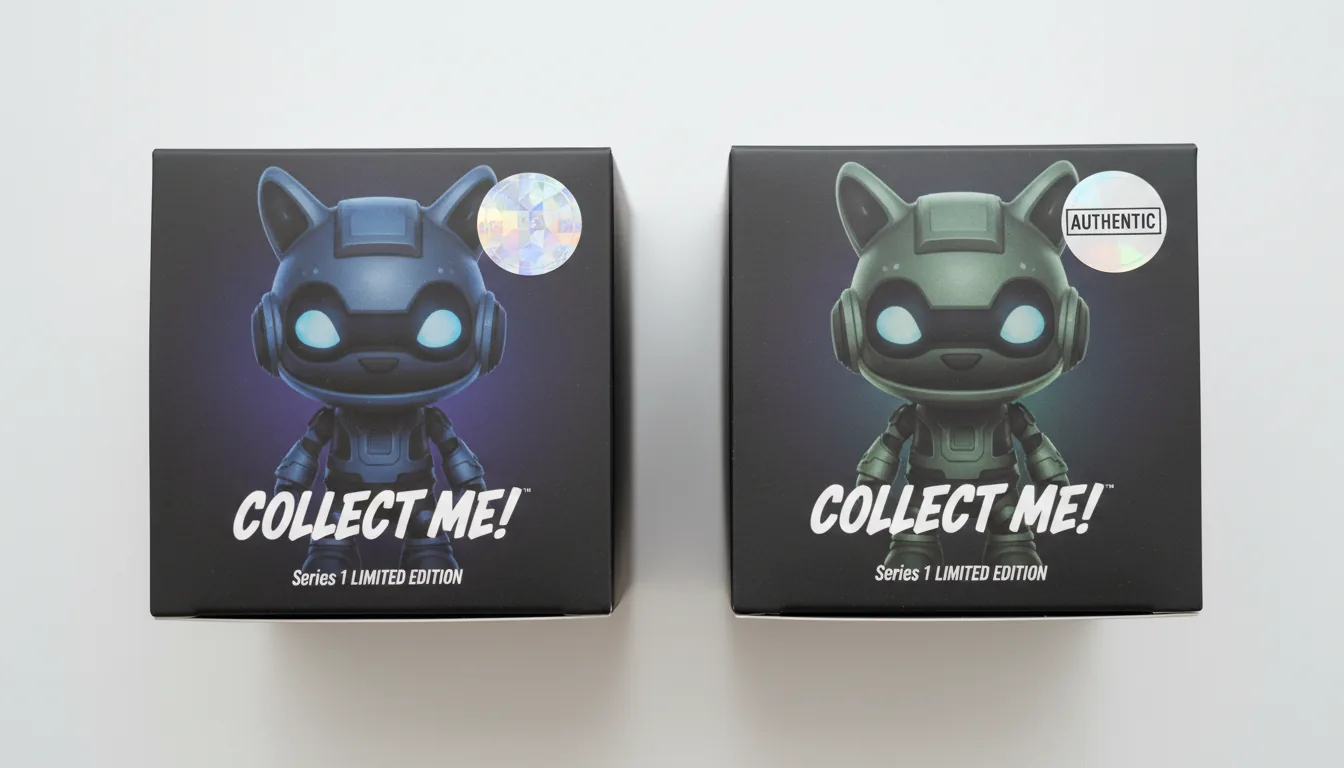
Holographic authenticity sticker
Authentic Pop Mart boxes carry a holographic sticker that shifts colors when tilted. Fakes use flat foil or no sticker at all.
QR code on the box bottom
Scan the QR — authentic codes resolve to a working pop-mart.com authentication page. Bootleg QRs are dead, redirect, or scan to spam.
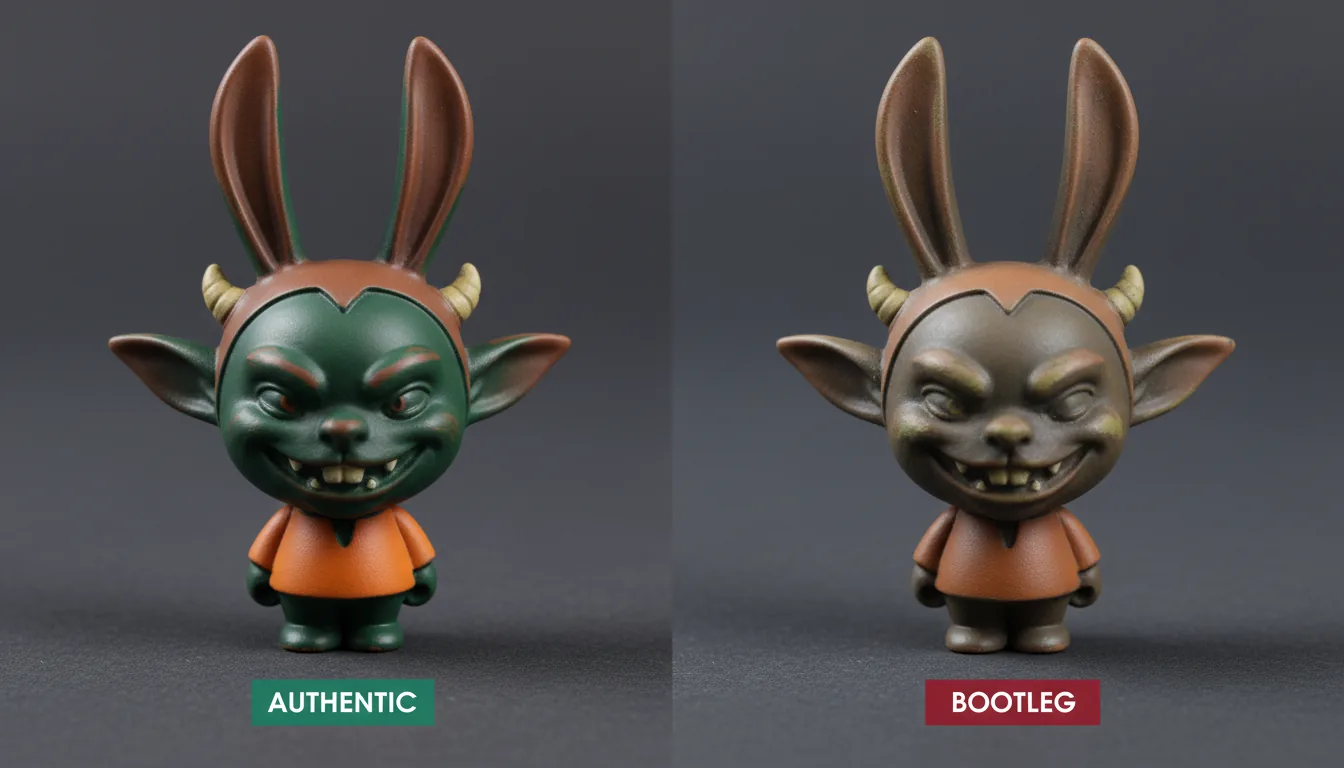
Paint application sharpness
Authentic paint stops cleanly at edges. Bootleg paint slops over teeth, eye whites, or facial recesses.
Vinyl seam line
Authentic seams are nearly invisible — 0.1 mm or less. Bootlegs have a visible flash line you can feel with a fingernail.
Figure weight
Standard 7-cm Labubu weighs ~28–32g. Bootlegs feel hollow at 18–24g due to thinner vinyl walls.
Foot / sole text printing
Pop Mart prints "© KASING LUNG / POP MART" sharply on the foot. Bootleg text is fuzzy, misspelled, or missing.
Box finish & print alignment
Authentic boxes are matte-finish premium card with perfect color registration. Bootlegs are glossy, with slight color misalignment in printed art.
Where you bought it
Single most reliable signal. Anything bought from pop-mart.com, official stores, or licensed retailers is real. Anything from AliExpress / Temu / Instagram dropshippers is suspect by default.
The Packaging Comparison
Most authentication starts before you even open the box. Pop Mart's packaging engineering is genuinely sophisticated — the holographic sticker, the QR code, the print finish, and the box construction collectively cost more to produce than most counterfeiters are willing to match.
What to do with the QR code
Pop Mart began rolling out QR-coded authenticity stickers in 2024. The QR resolves to a one-time authentication page on pop-mart.com that confirms the figure has not been registered by another customer. If the page says "already verified" before you opened it, the box was tampered with — return it. If the QR scans to anything other than pop-mart.com, the box is a bootleg.
The Figure Itself
Once the box is open, the figure tells you everything. The single biggest tell is paint quality. Authentic Pop Mart figures are painted in factories with quality control reject rates above 8%. Counterfeiters do not have that overhead — paint imperfections that would be discarded at Pop Mart pass through to retail on bootlegs.
The "fingernail test" for vinyl seams
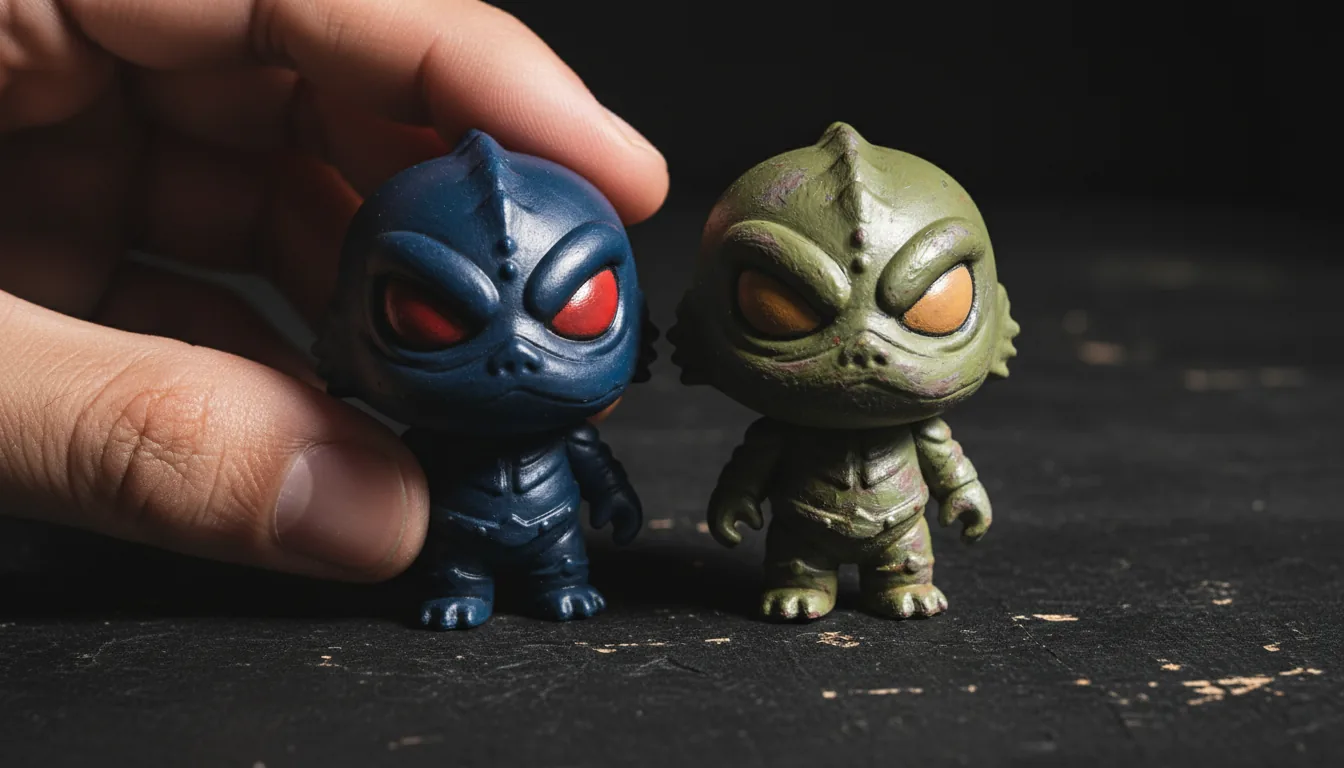
Run a fingernail across the side of the figure where the two halves of the vinyl mold meet. On an authentic Pop Mart figure, you can feel the seam barely — it's been hand-finished or molded with high-precision tooling. On a bootleg, the seam is sharp enough to feel like a small ridge. This test takes two seconds and is more reliable than visual inspection alone.
The Weight Test
If you have a kitchen scale (most do), weigh the figure. Standard 7-cm Pop Mart Labubu vinyl figures from "The Monsters" series weigh between 28 and 32 grams. Bootlegs run 4–10 grams light because they use thinner vinyl walls — a manufacturing shortcut that lowers material cost.
The plush variants are different — both authentic and bootleg plush Labubus weigh 60–80g. The weight test only works reliably on the vinyl figures.
Where to Buy Without Risk
The single most reliable authentication is provenance. Buy from one of these sources and authenticity is essentially guaranteed:
- pop-mart.com — Pop Mart's official site, region-locked. Ships from local warehouses where available.
- Pop Mart physical stores — Major cities globally have official Pop Mart retail. Always check pop-mart.com's store locator.
- Licensed retailers — Mindzai, Strangecat Toys, Kinokuniya, Yodobashi, Tokyo Otaku Mode, AmiAmi. These are official distributors with direct supply.
- Mercari Japan via proxy (Buyee, ZenMarket) — Japanese aftermarket sellers carry strong authentic stock; rare bootleg presence on the JP secondary market because Pop Mart has stronger enforcement there.
Sources to avoid unless you have specific reason to trust the seller:
- AliExpress, Temu, Shein — virtually 100% bootleg in the Labubu category as of 2026.
- Random Instagram drop-shipping accounts — most are reselling AliExpress stock.
- eBay listings under $10 — at this price, the math doesn't work for authentic figures.
- Amazon third-party sellers — mixed, but Amazon's authentication is weak. Default to skepticism.
If You Already Bought a Fake
Most marketplaces honor "not as described" or "counterfeit" disputes:
- eBay — open a "Not authentic" case. Refund typically processes within 5 business days.
- AliExpress — open a "Significantly different from description" dispute. Provide macro photos comparing to authentic markers.
- Mercari — file an authenticity dispute within the return window (typically 3 days from delivery).
- Amazon — return as "not as described." Amazon's A-to-z guarantee covers counterfeits.
- Credit card chargeback — last resort. Cite "merchandise not as described" and provide bootleg evidence.
Pop Mart itself does not authenticate or replace counterfeits, since the figures were not sold by Pop Mart. Don't waste time emailing them.
Why Bootlegs Exist (Brief Context)
Pop Mart's manufacturing partners are based primarily in Guangdong, China. The same industrial cluster — sometimes the same factories on different shifts — produces a substantial volume of unauthorized vinyl figures targeting global resale. The economics are direct: a bootleg Labubu costs roughly $1.50–$2.50 to produce and sells at $4–$8 to drop-shippers, who resell at $8–$15. The margin on each unit exceeds the margin Pop Mart earns on authentic ones.
This is why no authentication system fully solves the bootleg problem. The seven tells in this guide raise the cost of producing a convincing fake — every detail a counterfeiter has to match adds production cost. But somewhere there is always a counterfeiter willing to pay the cost when the resale margin justifies it.
Buy from authorized sources. The premium is small. The certainty is total.
Preguntas frecuentes
How can I tell if my Labubu is fake?
Check seven things: (1) box hologram authenticity sticker shifts color when angled — fakes use flat foil, (2) Pop Mart QR code on the bottom of the box scans to a working pop-mart.com page, (3) paint application is even with no overspray on teeth or eyes, (4) vinyl seam line is barely visible on authentic figures, (5) figure weight is consistent — bootlegs feel hollow, (6) printed text on the bottom of the foot is sharp and legible, (7) the box itself is matte-finish premium card stock, not glossy.
Where do most fake Labubu figures come from?
Most counterfeits originate from unauthorized factories in Guangdong, China, and reach buyers via AliExpress, Temu, certain eBay sellers, and Instagram drop-shipping accounts. Pop Mart's official channels — pop-mart.com, official Pop Mart stores in major cities, and licensed retailers like Mindzai or Strangecat Toys — are the only guaranteed sources.
Are fake Labubu figures dangerous?
Bootleg vinyl figures use unregulated PVC and pigments that may exceed acceptable phthalate or heavy metal limits, especially for figures handled by children. The structural quality is also lower — paint chips and fractures are common. Authentic Pop Mart figures comply with EN71 (EU), CPSIA (US), and JIS S 6020 (Japan) toy safety standards.
How much should an authentic Labubu cost?
As of April 2026, single Labubu blind boxes from Pop Mart retail at ¥99 in China (~$13.50 USD), $13.99 USD in the United States, and £14 in the UK. A full case of 6 retails at $84–$90. Anything dramatically below these prices on a third-party platform is almost certainly a bootleg.
Can I return a fake Labubu?
On most platforms — eBay, AliExpress, Mercari, Amazon — you can file a 'not as described' or 'counterfeit item' dispute and receive a refund. Photograph the item against the suspected fake markers (no hologram, paint quality, weight) before returning. Pop Mart itself does not authenticate or replace counterfeits since they were not sold by Pop Mart.