How to Start a Gashapon Machine Business
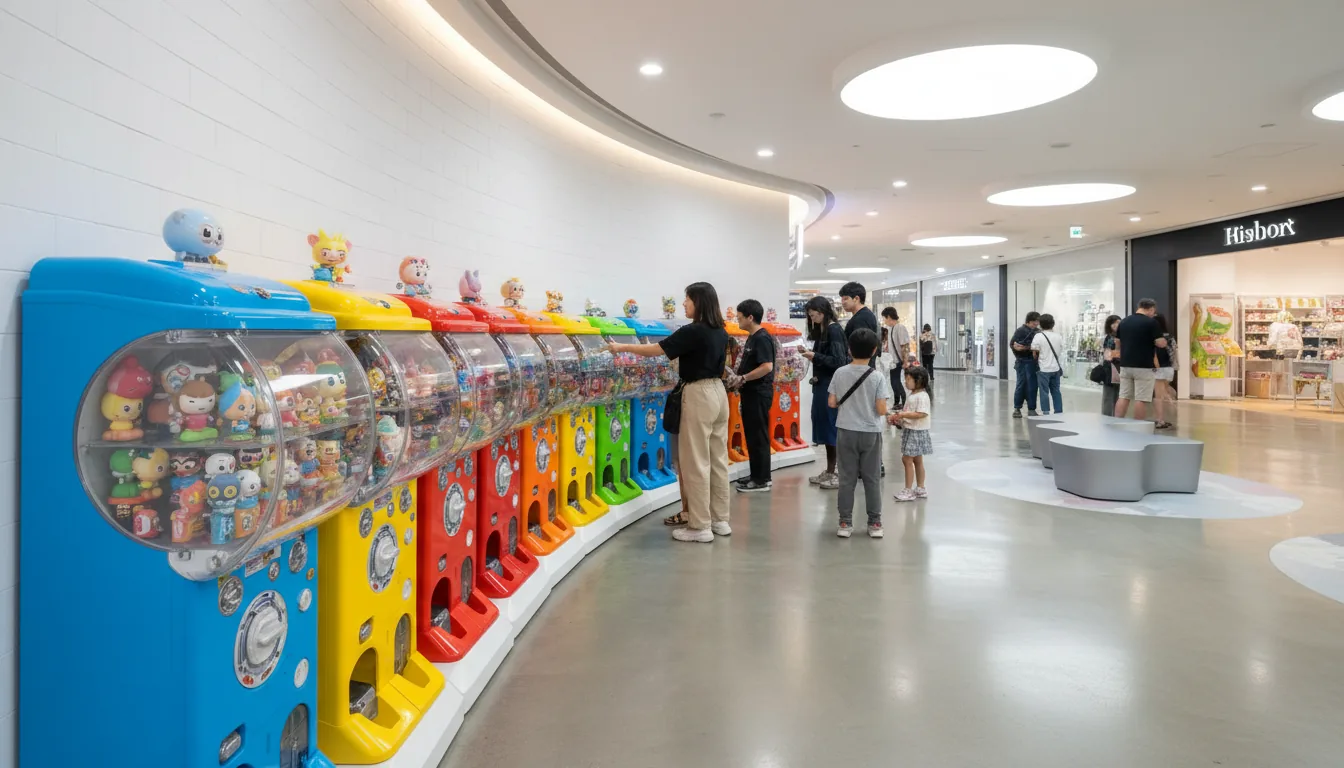
The gashapon machine business model is one of the simplest, most scalable passive income businesses available — and it's massively underexploited outside of Japan. While Asian malls in the US often have capsule toy sections, the vast majority of high-traffic Western locations are untapped.
This guide covers everything: finding and purchasing machines, sourcing wholesale capsule toys, identifying profitable locations, negotiating placement deals, and scaling from one machine to a multi-location operation.
Gashapon searches in the US are up 85% year-over-year for "gashapon machine for sale." Gen Z and Millennial nostalgia, anime culture mainstreaming, and the blind box trend (74K monthly searches for "blind boxes") have created massive consumer demand — while supply of quality operators remains thin.
Startup Costs: What You Actually Need
The biggest misconception about starting a gashapon business is that you need a lot of capital. A single-machine operation can launch for $500–$800 all-in. Here's the real breakdown:
| Item | Budget Option | Mid-Range | Premium |
|---|---|---|---|
| Gashapon Machine | $80–$150 (used) | $200–$400 | $500–$1,500 |
| Initial Toy Stock (500 units) | $150–$250 | $300–$500 | $600–$1,000 |
| Location Deposit (if any) | $0–$100 | $100–$300 | $300–$500 |
| Business Registration | $50–$150 | $50–$150 | $50–$150 |
| Signage / Display | $20–$50 | $50–$150 | $150–$300 |
| Total | ~$300–$700 | ~$700–$1,500 | ~$1,600–$3,500 |
Gashapon Machines for Sale: What to Buy
There are two categories of gashapon machines you'll encounter on the US market:
Home/Display Machines ($80–$200)
These are smaller, often battery-powered machines designed for personal use or very low-volume commercial use. Brands like Bandai sell these directly. They work with smaller 45mm or 50mm capsules and typically hold 50–100 capsules. Not ideal for business — low capacity and flimsy coin mechanisms that break under heavy use.
Commercial Gashapon Machines ($200–$1,500)
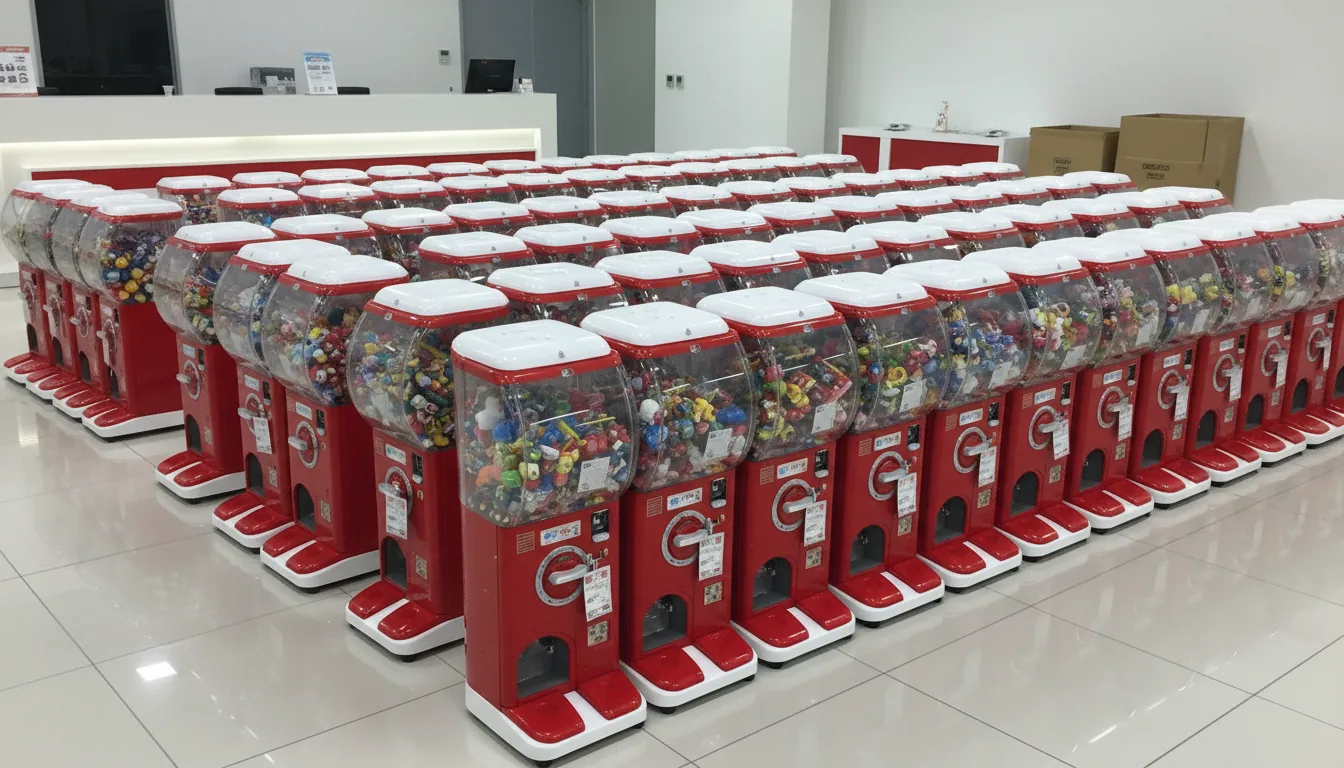
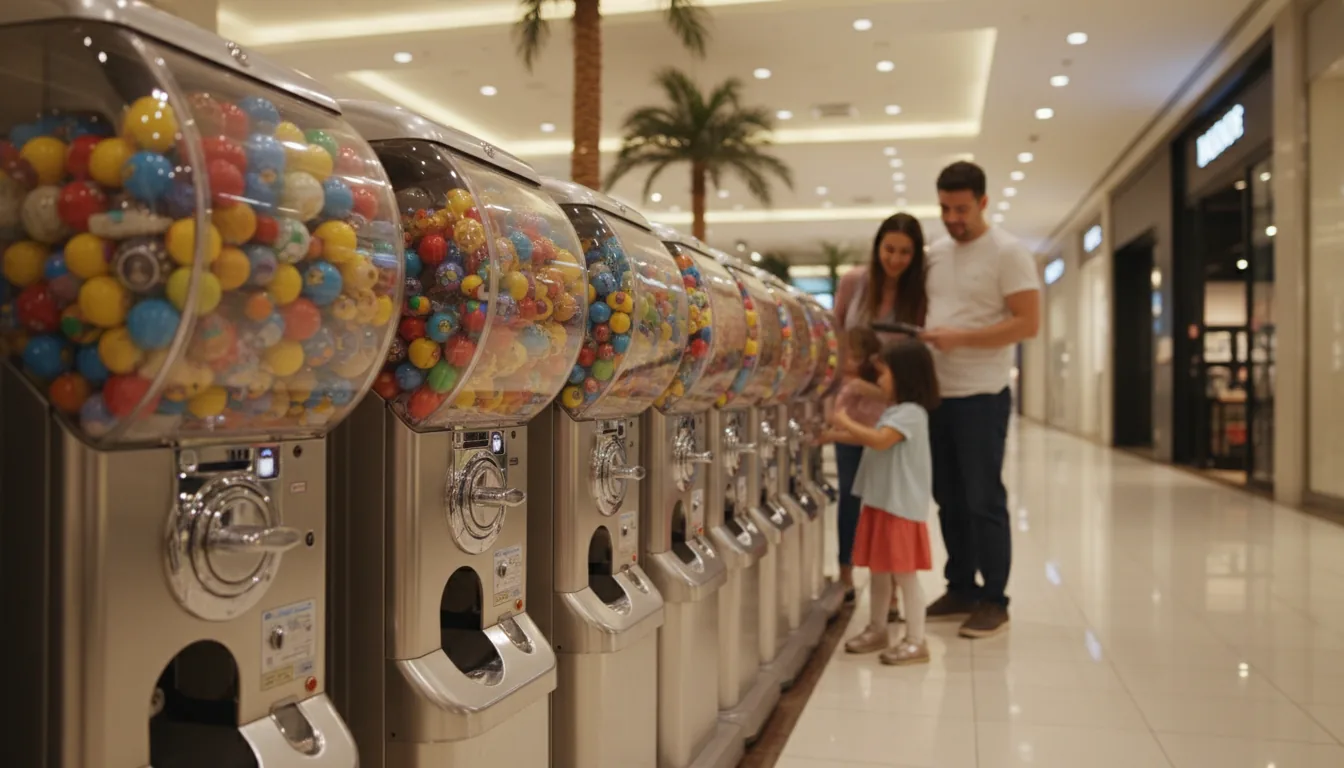
These are the real deal. Commercial machines are built for continuous use, accept $0.25–$2.00 per turn, and hold 200–400+ capsules. Key specifications to evaluate:
- Capsule size compatibility — 65mm or 75mm are standard; larger capsules allow bigger figures
- Coin mechanism quality — Suzo-Happ or Coin Controls mechanisms are industry standard
- Capacity — look for 200+ capsule capacity minimum
- Price per turn — most US operators set $1–$2; higher than Japan but market-appropriate
- Lock/key security — essential for coin collection
New machines: Global Gumball (globalgumball.com), Beaver Machine Corporation, Oak Manufacturing
Used machines: eBay (search "gumball machine commercial"), Craigslist, local vending equipment auctions, Facebook Marketplace
Japanese imports: Bandai Namco operators program (for US operators), import through freight forwarders — authentic Bandai machines add brand credibility.
Wholesale Capsule Toy Suppliers
Your product cost is the key lever on profitability. At retail prices, capsule toys cost $1–$3 each — your margin gets crushed. At wholesale, you should be paying $0.15–$0.60 per unit depending on quality and volume.
Top Wholesale Suppliers
- Gumball.com — US-based, wide variety, no minimum orders for most products
- Alibaba / 1688.com — Chinese manufacturers, lowest cost ($0.08–$0.25/unit), requires quality vetting and MOQ (minimum order quantities of 500–1,000 units)
- Fun and Function / Toysmith — US wholesale distributors with small minimum orders
- Bandai Namco (US operator program) — official Bandai product access; best brand recognition, higher cost ($0.50–$1.00/unit)
- AliExpress wholesale — middle ground, smaller MOQs than Alibaba
The cheapest Chinese capsule toys ($0.08–0.12/unit) often have poor paint quality and sharp edges — a liability issue with young children. Spend slightly more ($0.25–0.50/unit) for licensed or higher-quality unlicensed products. Your machine's reputation in a location depends entirely on product quality.
Best Locations for Gashapon Machines
Location is the single biggest factor determining your machine's revenue. A machine in the wrong spot earns $50/month; the same machine in the right spot earns $500+/month. Here's what to look for:
Tier 1 Locations (Highest ROI)
- Anime/comic shops — perfectly aligned audience; fans already spend money on collectibles
- Asian grocery stores / H-Mart / 99 Ranch — authentic gashapon culture alignment; high foot traffic
- Game shops (video game stores, board game cafes) — collector-minded audience, willing to spend
- Bubble tea shops — young, trend-conscious demographic; pull while you wait
Tier 2 Locations (Good Volume, Mixed Demographics)
- Laundromats — captive audience with time to kill, historically proven for vending
- Barbershops / Salons — waiting customers, especially if family-oriented
- Arcades — natural fit; already a spending mindset
- Children's dentist/doctor offices — reward after the appointment; parents very willing to pay $1–$2
Location Negotiation Tips
Most locations will take one of three deal structures:
- Revenue share (20–30%) — you keep 70–80% of coin revenue; location gets the rest. Best for high-traffic locations that have leverage.
- Flat monthly fee ($25–$100) — you pay a fixed amount regardless of revenue. Best for you in high-earning locations.
- Free placement — location takes nothing; they benefit from foot traffic draw. Rare, but possible for lower-traffic locations that want the visual appeal.
ROI Calculation Example
Let's model a realistic mid-range scenario: one commercial machine in a bubble tea shop, $1.00 per pull, 50% capsule fill rate from wholesale:
Scale this to 10 machines at better locations (higher foot traffic, anime shops, etc.) generating $500/month net each, and you're at $5,000/month passive income for ~4 hours of monthly servicing work.
Real Success Stories
The gashapon business community on Reddit (r/VendingMachines, r/smallbusiness) and YouTube has documented dozens of operators scaling from 1 to 50+ machines. Common patterns among successful operators:
- Start with 1–3 machines to learn operations before scaling
- Focus on niche locations (anime/gaming) rather than general retail
- Rotate product every 4–6 weeks to keep regulars engaged
- Use licensed IP when possible — Bandai figures are worth the premium for the brand pull
- Cluster machines in the same area to minimise service travel time