The Short Answer
Ichiban Kuji (一番くじ, literally "number-one lottery") is a paid prize-lottery format operated by Bandai Spirits, a subsidiary of Bandai Namco. Tickets are sold across Japanese convenience stores (Lawson, 7-Eleven, Family Mart), hobby chains (Animate, Yodobashi), and bookstores. You buy a ticket — typically priced between ¥680 and ¥980 in 2026 — and immediately collect a physical prize from a tier corresponding to the letter printed on your ticket. Every ticket wins. There are no losing tickets in any kuji lot.
This guarantee is the entire reason Ichiban Kuji exists as a category separate from gashapon, blind boxes, or trading-card mystery boxes. Where those formats centre on randomized rewards with potential disappointment (a duplicate, a low-rarity pull, a basic figure), kuji structures every outcome as a confirmed prize from a known prize pool.
Operator: Bandai Spirits · Ticket price: ¥680–¥980 ($4.60–$6.60 USD) · Tiers: A through G or H · Win rate: 100% · Lot size: 60–80 tickets typical · New series cadence: 10–15 per month across all IPs
How a Single Pull Works
Walk into a participating shop. The kuji lot is displayed at a counter or dedicated table — you'll see the IP banner (e.g., "ONE PIECE Wano Country Edition"), the prize tier breakdown printed on a card, and the remaining ticket counters showing how many of each tier are still available. The ticket-counter display is the single most important piece of information for a serious collector — it shows your current odds for each premium tier.
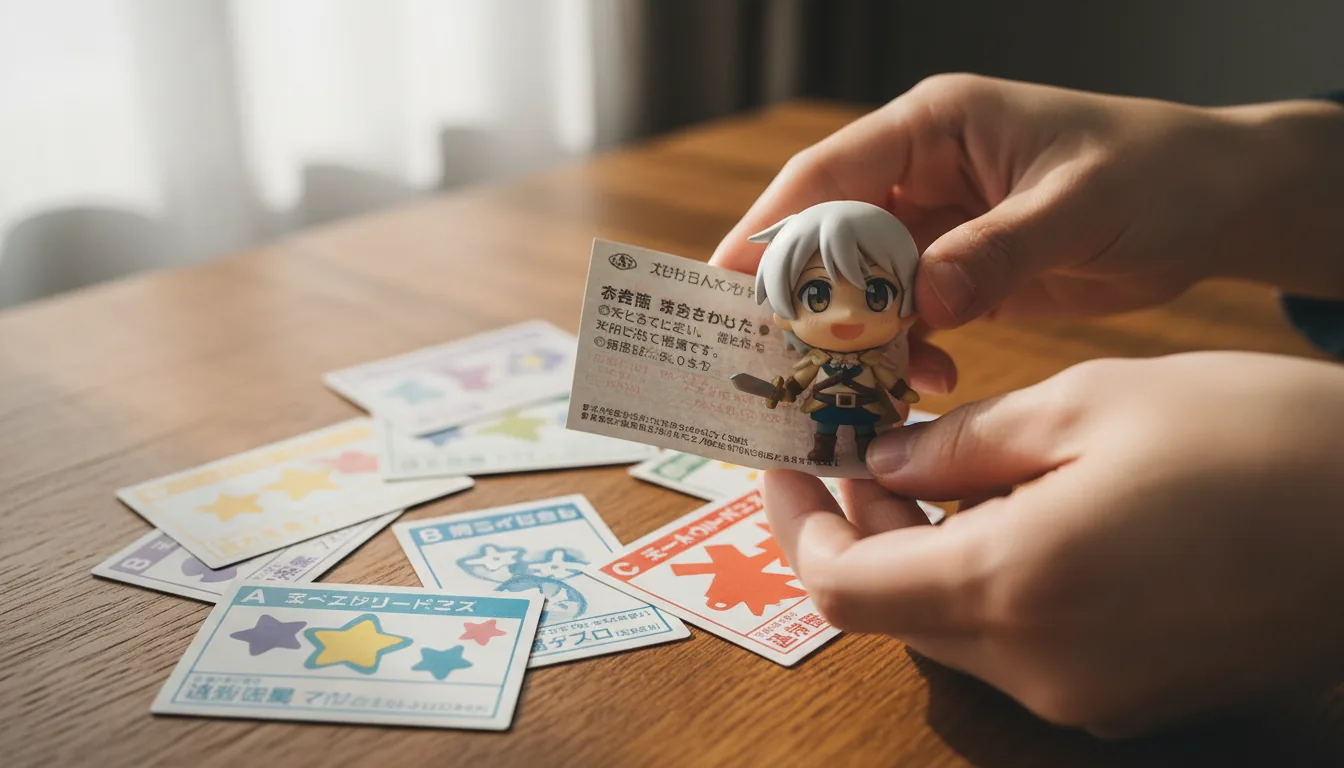
Pay the cashier. They take the ticket fee and gesture to a small drawer, box, or counter rack containing folded paper tickets. You take one, open it, and read the tier letter printed inside (A, B, C, D, etc.). Walk to the prize bin labelled with that tier and collect your figure or item. The cashier crosses your tier off the counter display.
That's the entire transaction. No second draws, no rate-up adjustments, no pity systems. The probability of any tier outcome is purely a function of how many of that tier remain divided by total remaining tickets.
The Counter Display Read
Experienced kuji collectors learn to read the counter display before buying. A typical lot starts with something like:
- Tier A — 1 prize (large premium figure)
- Tier B — 2 prizes (medium figures)
- Tier C — 3 prizes (medium figures, alternate sculpt)
- Tier D — 8 prizes (acrylic stands or cloth items)
- Tier E — 12 prizes (smaller figures or chibi)
- Tier F — 16 prizes (towels, mirrors, metal cards)
- Tier G — 18 prizes (rubber straps, charms)
- Last One Prize — 1 (special colorway of Tier A, awarded on final ticket)
If the display shows Tier A is gone but Tier B still has two remaining, your effective odds for Tier B are now meaningfully better than at lot launch. This drives a "second-half visit" pattern among serious collectors who track shop allocations and visit late in the cycle.
The Tier System Explained
Tier letters are roughly proportional to perceived prize value, but the exact contents vary per IP and per kuji series. A general expectation:
| Tier | Typical Prize | Roughly Equivalent Retail Price | Quantity per Lot |
|---|---|---|---|
| A | Premium 18–25cm figure, often "Masterlise" sculpt quality | ¥6,000 – ¥10,000+ | 1 |
| B | Medium 15–18cm figure, alternate character or pose | ¥4,000 – ¥7,000 | 2 |
| C | Medium figure, secondary character | ¥3,000 – ¥5,000 | 3 |
| D | Detailed chibi figure or premium acrylic stand | ¥2,000 – ¥3,000 | 5–8 |
| E | Smaller chibi or kawaii figure | ¥1,500 – ¥2,500 | 8–12 |
| F | Cloth item, ceramics, towel, or art print | ¥800 – ¥1,500 | 12–16 |
| G | Rubber strap, metal charm, sticker set | ¥400 – ¥800 | 16–20 |
| Last One | Special colorway of Tier A (always exclusive) | ¥10,000+ on resale | 1 (final ticket) |
Two important nuances:
- Tier letters are not standardised across all kuji. Some compact lots stop at F. Some premium lots extend to H or include additional sub-tiers. Always check the lot's specific prize card before assuming.
- "Roughly equivalent retail" is what comparable products would cost at standalone retail — not what you paid for the ticket. The expected-value math on kuji is intentionally tilted in the operator's favour, but the ceiling outcomes (Tier A or Last One) deliver products that would cost 5–15× the ticket price if released at retail.
The Last One Prize
Every Bandai Spirits kuji lot includes a Last One Prize — an exclusive item awarded to whoever pulls the final ticket from that specific shop's lot. The Last One Prize is typically a special-colour or alternate-finish version of the Tier A figure, never sold separately and never appearing in any other lot.
The Last One Prize creates the most dramatic moments in the kuji ecosystem. As a lot approaches depletion (the counter display shows 5, 3, then 1 ticket remaining), word spreads on Japanese collector forums and social media. The final ticket buyer takes home both whatever tier their ticket draws AND the Last One Prize. This combination — a guaranteed Tier whatever-you-pulled plus the exclusive Last One — is why end-of-lot ticket buying behavior is itself a phenomenon worth understanding. We cover the mechanics in detail in our Last One Prize guide.
Ichiban Kuji vs Gashapon vs Blind Boxes
The three formats share an "experience product" lineage but diverge sharply on mechanics:
| Format | Cost per Pull | Win Guarantee | Duplicates Possible? | Typical Output |
|---|---|---|---|---|
| Gashapon | ¥200–¥500 | Yes — but random from set | Yes | Capsule toy, 4–7cm figure |
| Ichiban Kuji | ¥680–¥980 | Yes — guaranteed tier | No (within a lot) | Figure or item from defined tier |
| Blind Box | $8–$15 | Yes — but random from set | Yes | 3–10cm designer figure |
The functional difference: gashapon and blind boxes randomise which figure from a known set you receive, accepting that you might pull a duplicate of one you already own. Ichiban Kuji randomises which tier of prize you receive, but each prize within a lot is unique — the lot of 60 tickets includes exactly one Tier A figure, exactly two Tier B figures, etc., so you cannot pull a duplicate of someone else's pull from the same lot.
Where to Buy in Japan
Ichiban Kuji distribution in Japan is wide. Common physical locations:
- Convenience stores — Lawson is the largest kuji distributor, followed by 7-Eleven and Family Mart. Lawson carries roughly 60% of all active kuji series at any given time.
- Hobby chains — Animate, Yodobashi Camera, Bic Camera, Sofmap, Mandarake, and Toranoana stock kuji especially around new releases.
- Bookstores — Kinokuniya and Tsutaya often carry kuji tied to manga or light-novel IP releases.
- Department store toy floors — Don Quijote and major department stores in Akihabara, Shibuya, and Osaka's Den Den Town.
Lot allocation per shop is small. A single Lawson location might receive only one full lot of 60–80 tickets for a popular series, which can sell out within hours of release for high-demand IPs like One Piece or Demon Slayer.
Buying Outside Japan
Direct kuji ticket purchases are Japan-only. International collectors access the system through three channels, each with different cost and risk profiles:
- Pre-pulled prizes via Mercari Japan or Yahoo! Auctions Japan — bought through a proxy service (Buyee, ZenMarket, FromJapan). You pick the exact tier prize you want and pay aftermarket prices.
- Pre-set lot purchases via specialist retailers — sites like HypeKuji, AmiAmi, and Tokyo Otaku Mode sell entire kuji lots (you buy all 60–80 tickets at once and receive every prize).
- Single-ticket pulls via online proxies — a smaller number of services let you remotely buy individual tickets and have prizes shipped, recreating the lottery experience online.
Costs scale with method: pre-pulled prizes are most expensive per item but lowest-risk. Lot purchases are most cost-efficient per item but require committing to several thousand dollars upfront. Online single-ticket pulls split the difference. Our online buying guide walks through the workflow on each platform.
Why Ichiban Kuji Matters
For collectors, Ichiban Kuji occupies a specific gap that nothing else fills: high-quality character figures with a defined upper bound on cost per acquisition, with the guarantee that any ticket pull contributes to your collection. The format is structured around the same anticipation that makes lotteries compelling, but it removes the failure case — you never walk away with nothing.
For Bandai Spirits, kuji is a direct-to-fan distribution mechanism that bypasses traditional retail forecasting. A lot of 60 tickets sold through Lawson nationwide is a different revenue model than a single SKU ordered by a hobby chain. The format is also a flexible vehicle for premium sculpts that wouldn't sustain dedicated retail releases.
For the international collector market, the practical implication is that Ichiban Kuji gives you access to figure quality and IP licensing that's genuinely hard to match elsewhere — at a unit cost that, while not cheap, sits below comparable scale figures. Understanding how the lottery works, how the tier system distributes value, and how to access lots from outside Japan is the foundation for the rest of this hub.
Experience the capsule toy pull mechanic in your browser — free, no account needed.
🎰 Open the Simulator →Preguntas frecuentes
What is Ichiban Kuji?
Ichiban Kuji (一番くじ, 'number-one lottery') is a paid prize lottery by Bandai Spirits sold in Japanese convenience stores and hobby shops. Every ticket pulls a guaranteed physical prize. There are no losing tickets. Prizes are organized into tiers from A (premium figures) down to G or H (smaller items).
How much does an Ichiban Kuji ticket cost?
Tickets typically cost ¥680 to ¥980 in Japan as of 2026, depending on the IP and lot. Premium licensed series like One Piece or Dragon Ball trend toward ¥980, while less prominent IPs may sit at ¥680.
What is a Last One Prize in Ichiban Kuji?
The Last One Prize is awarded to whoever pulls the final ticket from a kuji lot. It is typically a special colorway or alternate version of the top-tier (Tier A) figure, exclusive to that lot. Last One Prizes routinely sell at 5–20× retail value on the secondary market.
How is Ichiban Kuji different from gashapon?
Gashapon are randomized capsule toys from coin machines (¥100–¥500 per pull, with a chance of duplicates). Ichiban Kuji are paid lottery tickets (¥680–¥980) that always win something — every ticket pulls a guaranteed prize from a defined tier structure. Ichiban Kuji prizes are also typically larger and higher-quality than gashapon.
Can I buy Ichiban Kuji outside of Japan?
Direct kuji ticket sales are Japan-only, but international collectors buy through proxy services (Buyee, ZenMarket, FromJapan), kuji-specialist resellers (HypeKuji, Tokyo Otaku Mode), and aftermarket platforms (eBay, Mercari Japan via proxy). Pre-set lot purchases — buying every ticket in a lot at once — are also offered by some specialists.