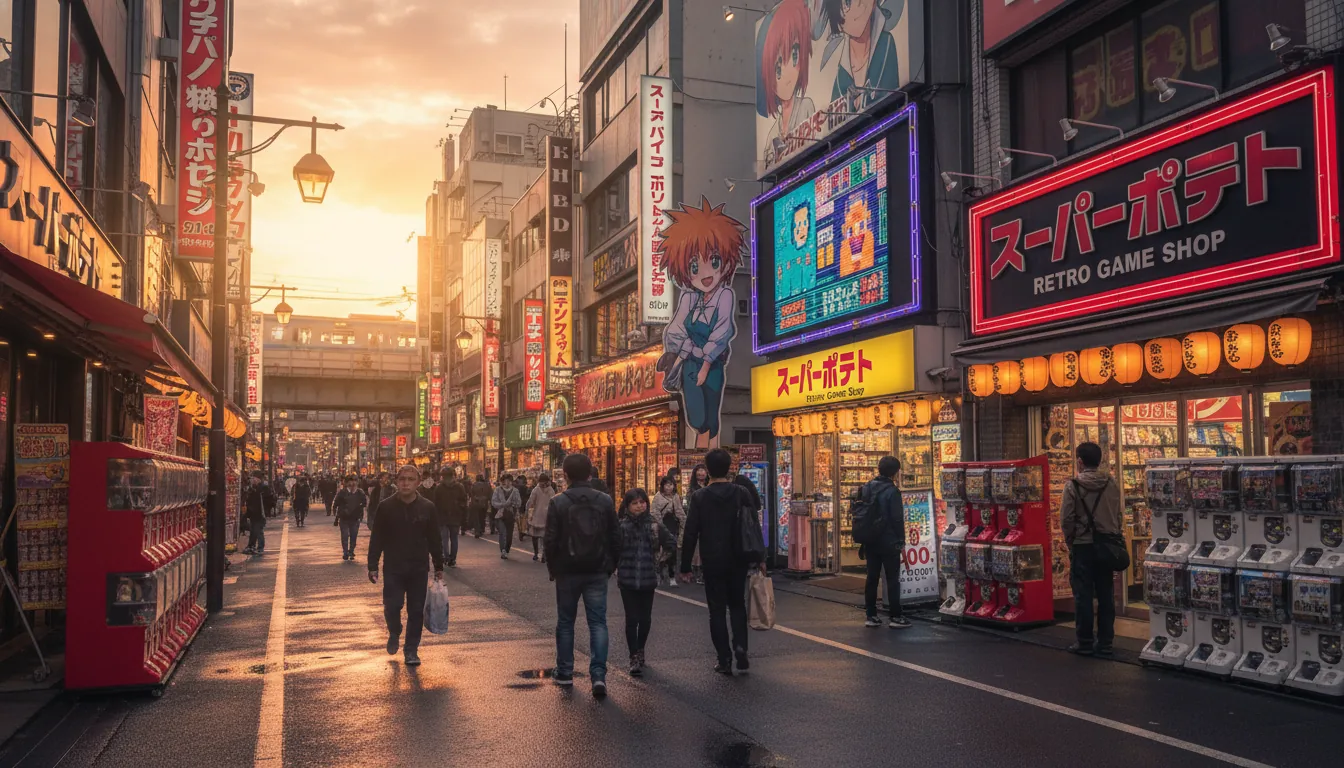
What Is Den Den Town?
Den Den Town (でんでんタウン) is Osaka's otaku and electronics district, centered on Nipponbashi (日本橋), a street running roughly north–south through the Namba area of Osaka's Naniwa Ward. The "Den Den" name comes from "Denki" (電気, electricity) — like Akihabara, it began as an electronics and components district in the postwar era before transitioning toward anime, manga, games, and capsule toy culture from the 1990s onward.
The district stretches approximately 800 meters along Nipponbashi Street (also called "Otaku Road" by locals) between Namba and Ebisucho, with the highest density of hobby shops concentrated in the southern half of this stretch. Unlike Akihabara's broad Chuo-dori boulevard, Nipponbashi is a narrower two-lane street with shops packed tightly on both sides and arcade/tower machine banks occupying entire buildings.
The Osaka collector community has a reputation for being more hardcore and less tourist-oriented than Tokyo's equivalent scene. Prices on secondhand goods, in particular, tend to run 10–20% lower than comparable Akihabara prices — a function of lower rent costs and a local clientele that is largely Japanese rather than international. For collectors willing to do the research, Den Den Town consistently delivers value that Akihabara can't match.
Den Den Town vs. Akihabara: Honest Comparison
| Factor | Den Den Town (Osaka) | Akihabara (Tokyo) |
|---|---|---|
| New machine releases | 1–2 weeks behind Tokyo | First deployment in Japan |
| Secondhand prices | 10–20% lower on average | Higher due to tourist demand |
| Crowd composition | Majority Japanese locals and collectors | Heavy international tourist mix |
| Unique events | Nipponbashi Street Fes (largest cosplay event in Japan) | Proximity to WonFes, Comiket |
| Vintage/retro toy | Excellent — Jungle stores | Good — scattered across shops |
| Total machine count | ~800–1,200 units in district | ~3,000+ units in district |
Street Map Breakdown: Navigating Nipponbashi
The district is navigable north-to-south with clear zones of activity:
Northern Section (Namba-end, near Ebisucho Station)
The northern approach to Den Den Town from Namba Station (Midosuji Line, exit 5 or walk from Namba Parks) passes through a transitional commercial zone before entering the collector district proper. The first dedicated hobby shops appear approximately 200 meters south of the crossing at Sakaisuji-dori. This section hosts some of the larger building footprints including a multi-floor Joshin (electronics chain) that contains a dedicated capsule machine floor.
Central Core (Nipponbashi 1–3-chome)
This is the heart of Den Den Town and where gashapon density peaks. Both sides of the street are lined with figure shops, manga retailers, game stores, and dedicated machine buildings. Several of the must-visit locations (Jungle, K-Books Osaka, the dedicated gacha tower buildings) are concentrated here. Budget the most time for this section.
Southern Section (toward Ebisucho Station)
The southern end transitions back toward general retail and electronics. There are still hobby shops here but the collector concentration thins out. Ebisucho Station (Sakaisuji Line) provides a southern exit from the district, useful for heading toward Shinsekai or the Tsutenkaku Tower area if combining sightseeing.
Top Shops in Den Den Town
Jungle (ジャングル) — Multiple Locations
Jungle is Osaka's answer to Nakano Broadway's Mandarake — a multi-branch secondhand toy and figure retailer that specializes in vintage and rare collector items. Their Den Den Town locations (there are typically 3–4 stores on the strip covering different categories) are legendary among Japanese collectors for deep vintage stock. For gashapon specifically, Jungle maintains large glass-case sections of individual capsule figures organized by series and era — making it one of the best places in Japan to complete discontinued series. Their pricing is competitive, and staff are known for expertise with vintage toy lines that most Tokyo shops have stopped tracking.
Super Potato Osaka (スーパーポテト大阪)
The Osaka branch of the beloved retro game chain is located on Nipponbashi and, like its Akihabara counterpart, maintains a gaming-themed capsule machine section. Super Potato Osaka tends to stock slightly different machine series than the Tokyo location — some Kansai-distributed machine series that don't make it to Tokyo. The retro gaming section itself is excellent and worth visiting even if you're not specifically hunting gaming-themed gashapon.
Mandarake Osaka (まんだらけ大阪)
The Mandarake presence in Osaka (the Den Den Town location, different from the Shinsaibashi area stores) is a comprehensive single-floor secondhand shop with all the expected categories. For gashapon, the case selection tends toward anime-licensed properties (Shonen Jump, Bandai anime series) with a good representation of Osaka-regional seller liquidations — meaning you sometimes find things here that were never common in Tokyo. Operating hours typically 12:00–20:00.
Animate Osaka Nipponbashi
The Den Den Town Animate serves the same function as its Tokyo counterparts — new anime goods with a machine bank near the entrance tied to current-season anime. Hours 11:00–21:00 weekdays, 10:00–21:00 weekends. The Osaka Animate has been known to carry Kansai-regional event exclusive capsule series during Nipponbashi Street Fes and other local events.
Joshin Denki Hobby Land
Joshin (上新電機) is the Kansai regional electronics and hobby retail chain. Their Hobby Land format stores in Den Den Town are multi-floor and maintain capsule machine sections comparable to Yodobashi Camera in Akihabara. Strong on Takara Tomy Arts and Bandai current-release machines. Joshin also runs its own gashapon machine installations occasionally featuring Joshin-exclusive capsule items.
K-Books Osaka
K-Books is a doujinshi and anime goods secondhand chain with a Den Den Town location that, like its Tokyo branches, carries capsule figure singles alongside its main doujinshi inventory. Useful for completing series in the ¥200–¥600 price range.
Best Dedicated Gashapon Buildings
Den Den Town has several buildings dedicated primarily or substantially to capsule machines. Unlike Akihabara's concentrated Gachapon Kaikan, Osaka's dedicated gacha buildings tend to be narrower and taller — converting former pachinko parlor or retail building footprints into multi-floor machine towers. Current notable buildings include:
Nipponbashi Gacha Tower Buildings
There are typically 2–3 buildings along the central section of Nipponbashi that operate almost entirely as multi-floor gashapon installations — 3 to 5 floors with machines on every level, connected by narrow stairs. These buildings rotate stock aggressively and often have Osaka-first deployments of regional exclusives from Kansai-focused distributors. Look for buildings with machine graphics on the facade and gacha/ガチャ signage — they're unmissable once you're in the central core.
Machine pricing in these tower buildings tends to include a slightly higher proportion of ¥200 and ¥300 machines than Akihabara's premium-skewed selection — good for collectors wanting to maximize number of turns per yen. The flip side is that some series run on older stock than you'd find at Akihabara's Bandai Official Shop.
Nipponbashi Street Fes: Japan's Biggest Cosplay Street Event
Nipponbashi Street Fes (日本橋ストリートフェスタ) is held annually in early spring (usually March, exact date varies by year) and is without exaggeration one of the most spectacular otaku events in Japan. The entire length of Nipponbashi is closed to traffic and transformed into a walking street festival attended by approximately 200,000 people over two days — making it arguably the largest cosplay concentration event in the world.
For gashapon collectors, the event is exceptional for several reasons:
- Event-exclusive capsule series: Many manufacturers deploy Nipponbashi Street Fes exclusive machines — series available only during the event weekend, at machines set up specifically for the festival. These limited items command significant premiums on secondhand markets afterward.
- Density of collectors: The event draws Japan's most dedicated otaku and collector community. The trading and discussion culture around rare capsule items is particularly active during this weekend.
- Shop promotions: Nearly every shop in Den Den Town runs special promotions during the event — discounts, bonus items with purchases, exclusive merchandise. Machine restocks happen daily during the festival period.
- Atmosphere: Walking through 800 meters of cosplayers, collectors, live performances, and temporary stalls while hunting for capsules is an experience with no equivalent anywhere in the world.
If your Japan travel dates can accommodate a Nipponbashi Street Fes visit, it should be on every gashapon hunter's bucket list. Book accommodation well in advance — Osaka accommodations sell out rapidly for the festival weekend.
Osaka Exclusive Gashapon Series
Several regional distribution dynamics result in Den Den Town regularly hosting capsule series before or instead of Tokyo:
- Osaka Exclusive Bandai Series: Bandai's regional marketing teams occasionally deploy "Osaka limited" machine series, particularly those tied to Osaka-specific character IPs, Osaka tourism themes, or event collaborations. These are identifiable by "大阪限定" (Osaka Limited) text on machine labels.
- Kansai Character Exclusives: Local mascots and IPs with Kansai origins (Osaka's official characters, regional food mascots like Kuidaore Taro) appear in capsule series that are rarely distributed to Tokyo markets.
- Universal Studios Japan Tie-ins: USJ is Osaka's major theme park, and limited gashapon series tied to USJ attractions (Nintendo World, Harry Potter area) appear in Den Den Town shops. These differ from the USJ-internal machine series sold exclusively inside the park.
- Takoyaki and Osaka food themed: Osaka's pride in its food culture (takoyaki, okonomiyaki, kushikatsu) has spawned several capsule series featuring hyper-realistic miniature food replicas of Osaka specialties — found almost exclusively in Den Den Town and Osaka-area machines.
Namba and Dotonbori: Capsule Machines Beyond Den Den Town
Den Den Town's immediate neighborhood — the broader Namba and Dotonbori entertainment district — contains additional capsule machine concentration beyond the dedicated otaku strip:
Dotonbori Riverwalk Area
The famous Dotonbori canal area (home to the Glico Running Man sign) is tourist-dense and prices reflect this. However, several shop fronts along the Dotonbori strip maintain capsule machines targeting the tourist demographic — these tend to carry broadly appealing series (Hello Kitty, Pikachu, popular anime characters) at standard pricing. Less interesting to dedicated collectors but useful if you want a quick spin while sightseeing.
Namba Parks and Namba City
The shopping complexes around Namba Station contain mainstream machine banks — Animate Namba (a separate location from Den Den Town's Nipponbashi Animate) and various mall retailers maintain machines here. The Namba Parks complex has a Don Quijote accessible late at night with standard-selection machines.
Shinsaibashi Shopping Arcade
The Shinsaibashi-suji shopping arcade (one of Japan's longest covered shopping streets) contains scattered machine installations throughout its length. Less concentrated than Den Den Town but worth a casual scan if you're walking between Namba and Shinsaibashi sightseeing.
Combining Den Den Town with a Kyoto Day Trip
Osaka and Kyoto are separated by approximately 15 minutes on the JR Shinkansen (Nozomi/Hikari) or 30–40 minutes on the cheaper Kintetsu Line or JR Special Rapid. This proximity makes a combined Osaka-Kyoto trip extremely practical.
For gashapon specifically, Kyoto has its own collector scene centered around the Teramachi shopping arcade near Kyoto Station and the cluster of hobby shops near Kawaramachi Station. Kyoto's collector culture skews heavily toward historical/traditional aesthetic capsule series — figures of geisha, samurai, temple architecture miniatures, and Kyoto-specific character capsules. The contrast with Den Den Town's anime-forward selection is remarkable.
Recommended two-day structure: Day 1 in Osaka (Den Den Town morning/afternoon, Dotonbori evening). Day 2 in Kyoto (Fushimi Inari in the morning, Teramachi shopping and capsule hunting in the afternoon, return to Osaka for the evening). The JR Pass or Kansai Area Pass covers travel between cities efficiently.
Getting to Den Den Town
From Osaka (Namba Area)
Walk south from Namba Station (Midosuji Line, Exit 5) approximately 10 minutes. Or take the Sakaisuji Line to Ebisucho Station and walk north — this deposits you at the southern end of the district.
From Shin-Osaka (Shinkansen arrival)
Take the Midosuji Line from Shin-Osaka south to Namba (approximately 20 minutes, ¥290). Then walk to Den Den Town as above. Total transit time from Shinkansen arrival to first machine: approximately 35 minutes.
From Kyoto
JR Special Rapid from Kyoto Station to Osaka Station (30 minutes, ¥580), then transfer to Midosuji Line to Namba. Or Hankyu Railway from Kyoto-Kawaramachi to Umeda (Osaka, 45 minutes, ¥430), then subway to Namba.
From Tokyo (Day Trip)
The Nozomi Shinkansen from Tokyo to Shin-Osaka runs every 10 minutes and takes 2 hours 22 minutes (¥13,620 standard, or JR Pass). This makes a full-day Den Den Town visit from Tokyo feasible, though expensive without a JR Pass covering the bullet train cost. Most collectors combine Den Den Town with a multi-day Kansai itinerary rather than a day trip from Tokyo.