From 10-Yen Novelties to Art Objects: A Historical Overview
The gashapon machine arrived in Japan in 1965, introduced by Bandai after the company observed American gumball and novelty vending machines. The earliest machines dispensed simple plastic rings, rubber balls, and elementary figurines at 10 yen per turn — the price of a candy. For the first two decades, gashapon was unambiguously a mass-market children's product. Quality was minimal by design: the economics demanded cheap molds, simple paint applications (or none at all), and generic IP-light designs that wouldn't attract licensing costs.
The transformation toward artistic legitimacy began gradually through the 1980s and accelerated in the 1990s as two parallel developments converged. First, Japan's toy collector culture matured — driven by adult anime fans who had grown up with the medium and now had disposable income to spend on high-quality representations of beloved characters and subjects. Second, a generation of highly skilled sculptors who had trained in the garage kit (手作りキット, tejukuri kitto) tradition — producing hand-sculpted, resin-cast figures sold in limited runs at Wonder Festival — began applying their craft to the gashapon format, which offered mass distribution unavailable to garage kit limited runs.
By the mid-1990s, companies like Kaiyodo and Yujin were producing capsule figures of biological subjects (fish, insects, birds) with scientific accuracy and sculptural detail that genuinely stunned professional biologists and naturalists who encountered them. These weren't toys in any dismissive sense — they were three-dimensional representations of natural subjects that exceeded the detail level of most science education models available at the time.
Key Artists and Sculptors Who Elevated Gashapon
Kow Yokoyama
Kow Yokoyama is one of Japan's most influential figure artists, best known as the creator of the "Ma.K." (Maschinen Krieger) universe — a science-fiction setting populated by robots and power suits with a distinctive retro-industrial aesthetic. Yokoyama's work occupies a unique position: he creates for the garage kit and hobby model world primarily, but his design language and aesthetic philosophy have directly influenced the visual vocabulary of premium gashapon figure design. The "weathered, functional-looking robot" aesthetic so prevalent in high-end mecha capsule figures traces partially to Yokoyama's influence on Japanese figure culture broadly.
Yokoyama's most quoted artistic statement — that a figure should look like it was made for a specific purpose, not like a toy — has become a guiding principle for designers who want to move beyond the character-product framing of most figure work toward something with more physical conviction.
Takayuki Takeya
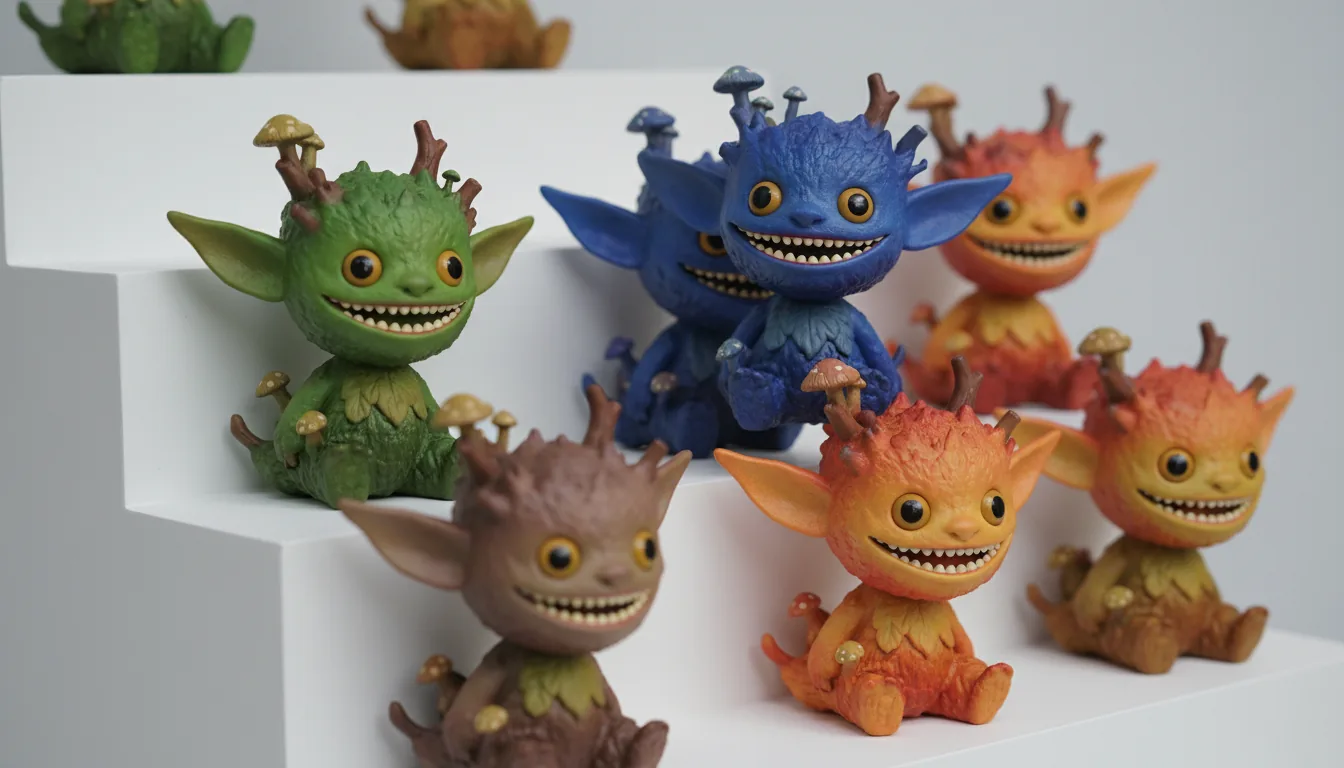
Takeya is a sculptor and character designer whose work ranges from garage kits to officially licensed figures for major publishers. His aesthetic specializes in deeply detailed organic textures — creatures with surface complexity that rewards close examination — and he has contributed designs to capsule figure series through collaborations with Kaiyodo and smaller specialty manufacturers. Takeya's figures are recognizable for their density of surface information: a single 8cm figure might contain more visible texture detail than most 30cm mass-market statues.
Sculptor Teams at Kaiyodo
Kaiyodo's in-house and contracted sculptor teams are collectively among the most important artistic forces in gashapon history. The company has never publicly released full sculptor credits for all its capsule series, but certain individual sculptors have become identifiable by style within the collector community. The biological-subject series (Sofubi Toy Box, Capsule Q Museum, Revoltech Assemble Borg) showcase sculptors who combine zoological knowledge with artistic interpretation — producing fish, insect, and bird figures that are simultaneously scientifically informative and aesthetically compelling objects.
Tsuyoshi Takahashi
Takahashi is credited as one of the principal sculptors behind Kaiyodo's Revoltech joint system figures — the highly poseable action figure line that spun out of Kaiyodo's capsule figure expertise. His work on the Revoltech line (used for Evangelion figures, transforming robot figures, and the Assemble Borg series) demonstrated that the technical precision required for functional gashapon-scale articulation was a legitimate engineering and sculptural achievement, not a compromise from "real" figure making.
The Kaiyodo Legacy: Science as Art
Kaiyodo (海洋堂) deserves separate discussion because its contribution to gashapon-as-art is unparalleled. Founded in Osaka in 1964 by Yasuhiro Takiguchi as a garage kit and model shop, Kaiyodo transitioned into figure manufacturing and by the 1990s was producing the highest-quality biological figure capsule series available anywhere in the world.
The "Capsule Q Museum" series — which runs across dozens of sub-series covering fresh and saltwater fish, Japanese insects, prehistoric animals, deep-sea creatures, architectural models, and natural phenomena — represents one of the most sustained artistic-scientific collaborations in the history of the toy industry. For each series, Kaiyodo works directly with academic naturalists and museum curators to ensure biological accuracy. The fish series, in particular, has been praised by professional ichthyologists for its anatomical correctness at a scale (5–8cm) that makes the achievement particularly impressive.
In 2003, the Museum of Contemporary Art Tokyo included Kaiyodo figures in a group exhibition on design and manufacturing — one of the first instances of gashapon-adjacent objects entering a major art institution's programming. The Kaiyodo Museum in Kochi Prefecture (opened 2016) is a dedicated institution for the company's figure output, treating the work with the same institutional seriousness as design museums treat furniture or applied arts.
How Premium Gashapon Figures Are Designed and Sculpted
The production pipeline for a high-end gashapon figure is more complex and longer than most collectors realize. Understanding this process helps explain why certain series represent genuine artistic achievements:
Concept and Licensing
For franchise-based series (anime, game, manga properties), the process begins with licensing negotiations and character brief documentation — model sheets, color specifications, key visual references. The sculptor's challenge is to translate 2D character design (often intentionally stylized and physically impossible) into a three-dimensional form that retains the character's visual identity while existing as a convincing physical object.
For original series (biological subjects, architectural miniatures), sculptors often work directly from photographic reference, sometimes consulting with subject-matter experts. Kaiyodo's fish series involves sculptors observing preserved specimens at natural history museums and, in some cases, freshly caught specimens to capture coloration that fades in preservation.
Digital Sculpting vs. Hand Sculpting
The industry shifted from primarily hand-sculpted masters (in epoxy putty or specialized modeling clay) to digital sculpting (using software like ZBrush) in the 2010s. This transition produced benefits — finer surface detail, faster iteration, more geometric precision — but also some losses. Hand-sculpted figures have a tactile quality, a slight irregularity that reads as organic and human, that digitally sculpted masters can struggle to replicate. The best contemporary sculptors combine both: digital blocking and structural work with hand-finishing of surface textures.
Master Figure to Mass Production
Once a master figure is approved, it's used to create production molds. The process of reducing a detailed 8cm master to a mass-producible injection-molded PVC (polyvinyl chloride) figure involves inevitable compromises. Undercuts (areas of the sculpt that would prevent the mold from releasing cleanly) must be eliminated or addressed with multi-part molds. Fine details below a certain tolerance threshold disappear in the transfer. The quality difference between the sculptor's master and the final machine-dispensed capsule figure is one of the factors that separates excellent manufacturer execution from mediocre — Kaiyodo's production quality retains more detail from master to production than any other capsule manufacturer.
Gashapon in Museums and Institutional Recognition
The institutional art world's relationship with gashapon is still emerging, but several significant moments mark its trajectory toward legitimacy:
- 2003: Museum of Contemporary Art Tokyo exhibitions include Kaiyodo figure work in a survey of Japanese design manufacturing.
- 2006: The Design Museum in London includes Japanese capsule toy culture in "The Art of the Toy," an international survey of contemporary toy design. Several Kaiyodo Capsule Q Museum fish figures are included as examples of design excellence at extreme scale constraints.
- 2010: The Kaiyodo-produced Evangelion figures are acquired by the Anime Museum in Osaka as cultural artifacts representing the development of Japanese character figure culture.
- 2016: The Kaiyodo Figure Museum opens in Kochi, Japan, as a dedicated institution. It houses over 30,000 objects representing the company's output across 50+ years, and functions as both a display space and a cultural documentation project.
- 2019: Multiple gashapon series featured in "Japan: Art and Design" at the Victoria and Albert Museum, London, as examples of contemporary Japanese material culture.
- 2022: A Kaiyodo Sofubi Toy Box prehistoric animal figure (the woolly mammoth from their paleontology series) is acquired by the Smithsonian National Museum of Natural History in Washington, D.C., as an example of science communication design — believed to be the first gashapon-format figure in a Smithsonian collection.
Collector Culture as a Parallel Art World
The gashapon collector community has constructed, largely outside conventional art world institutions, a parallel infrastructure that resembles art world practices: critical evaluation, market pricing, artist attribution, exhibition (through social media display rooms), and auction (through platforms like Yahoo Auctions Japan and specialized collector auction events at Wonder Festival).
This parallel art world is in many ways more egalitarian than the conventional one. A capsule figure that retailed for ¥300 can achieve secondary market prices of ¥5,000–¥20,000 not through gallery representation or critical endorsement but through community recognition of rarity and quality. The collector base makes its own assessments.
Collector-critics on platforms like Twitter/X, YouTube, and dedicated collector blogs maintain substantial followings by providing informed assessments of new releases — comparing sculpt quality, paint application, articulation, and material quality with the kind of detail that art critics apply to gallery work. Figures consistently praised in these communities for exceptional sculptural quality include the Kaiyodo Capsule Q Museum fresh-water fish series (Vol. 1–10), the Takara Tomy Arts "Ania" wild animal series (particularly the primate and big-cat figures), and Bandai's Gashapon Senshi Forte (SD Gundam figure line, running since the 1980s and consistently improving in quality while maintaining SD proportions).
Limited Artist Collaborations
The intersection of contemporary art and gashapon has produced a growing number of formal collaborations:
Takashi Murakami x Capsule Toy World
Murakami — the artist behind the "Superflat" movement and one of Japan's most internationally prominent contemporary artists — has engaged with the figure and capsule toy world multiple times. His Kaikai Kiki studio has produced gashapon-format figures of characters from his visual vocabulary (the DOB character, the smiling flowers) through limited distribution partnerships. These items command substantial premiums and blur the line between toy collectible and contemporary art object.
Nara Yoshitomo Figure Collaborations
Yoshitomo Nara, known for his paintings of solitary, slightly unsettling children, has authorized multiple figure adaptations of his characters — some in gashapon/capsule format for limited event distribution. Nara's involvement in toy culture dates to the late 1990s and has been consistent and enthusiastic; he considers figure-scale three-dimensional adaptations of his work a legitimate extension of his artistic practice rather than a merchandise byproduct.
Indie Artist Machine Installations
A more grassroots form of collaboration has emerged in the past decade: independent artists — painters, illustrators, ceramic artists — working with small capsule manufacturers to produce very limited run capsule items (often 100–500 units total) that are installed in single machines at specific galleries or events. These are artist multiples in the tradition of Fluxus and Conceptual Art — original works in edition, sold through a mechanism (the vending machine) that deliberately removes the gallery transaction from the process.
How to Spot Exceptional Gashapon Craftsmanship
Not all gashapon figures are art objects — most are mass-produced character merchandise that serves its purpose competently without aspiring to much more. The markers of exceptional craftsmanship include:
- Surface texture complexity: Does the figure have differentiated surface textures — skin vs. fabric vs. metal vs. hair — or does everything feel the same? High-end figures sculpt each material type distinctly.
- Anatomical coherence: For character figures, do proportions follow an internal logic even if stylized? For biological figures, is the anatomy defensible to someone with subject knowledge?
- Paint application precision: Are painted areas sharply defined with no bleed? Are shading and highlighting applied with intention, or is everything a single flat color? The best Kaiyodo fish figures use 4–8 distinct paint layers with hand-applied finishing details.
- Pose dynamism: Does the figure feel frozen in action or simply parked? Dynamic pose figures require more complex mold engineering and are more expensive to produce — choosing a dynamic pose is itself a craft and budget commitment.
- Material quality: Higher quality PVC formulations have better color fidelity and resist yellowing longer. Soft-vinyl (sofubi) figures have a different quality register — intentional softness and slight translucency can be artistic choices in the material.
The Future of Gashapon Art
Several developments are reshaping the relationship between gashapon and artistic culture:
Digital Integration
Bandai and several smaller manufacturers have experimented with capsule figures that include digital components — NFC chips that "unlock" AR (augmented reality) experiences, or QR codes linking to digital art content that complements the physical figure. This creates gashapon objects that exist simultaneously as physical sculptures and entry points to digital experiences.
3D Printing and Customization
As desktop 3D printing improves in resolution and material diversity, independent artists are producing gashapon-scale sculptures using additive manufacturing that they distribute through indie machine installations, Etsy, and crowdfunding. This democratizes the production side of gashapon art — you no longer need a Bandai production deal to create a gashapon series. The resulting work ranges from amateurish to genuinely striking, and a collector culture around premium indie capsule art is beginning to coalesce.
Phygital Convergence
Some artists are exploring "phygital" gashapon — physical capsule figures that correspond to or authenticate digital assets. The connection between the random-chance mechanics of the gashapon machine and the random-chance mechanics of digital collectible drops (loot boxes, NFT reveals) is not lost on artists working in this space. Whether phygital gashapon becomes a sustained art format or a passing trend remains to be seen, but it represents a genuine area of artistic experimentation that takes the medium seriously.
The most honest assessment of gashapon's relationship to art is this: some of it is art, most of it is merchandise, and the most interesting territory lies in the overlap — objects that serve the functions of both without being fully reducible to either. That's where the gashapon sculptors, collectors, and artists who take the medium seriously do their best work.