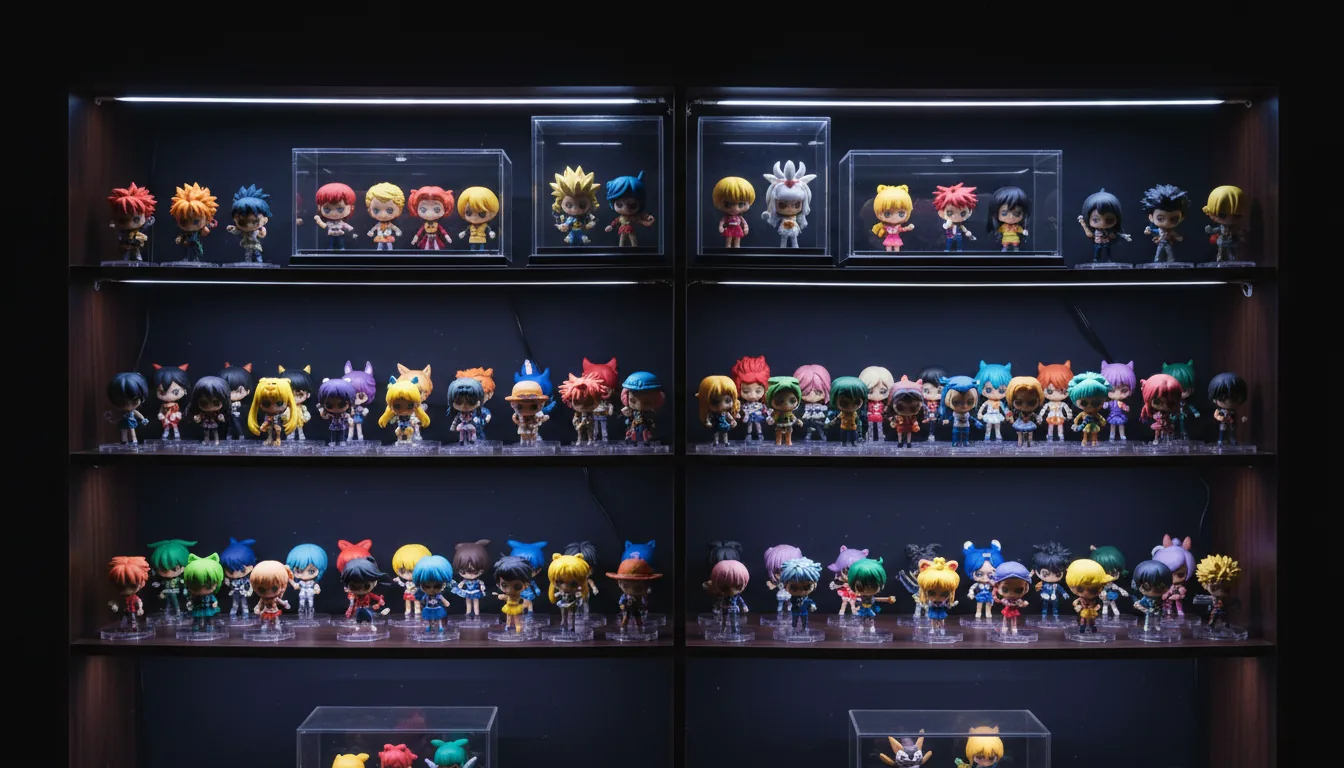
Why Display Philosophy Matters
Gashapon collectors face a specific display challenge: the figures are small (typically 5–10 cm tall), numerous (a committed collector can accumulate hundreds of pieces rapidly), and varied in aesthetic — a Kaiyodo hyper-realistic fish figure looks nothing like a Bandai Dragon Ball chibi figure, and both look nothing like a Sanrio accessory capsule. The naive approach is to line everything up on a single shelf and call it done. The result usually looks like a cluttered desk rather than a curated collection.
The underlying philosophy of good gashapon display is the same as museum curation: context transforms objects. A single Dragon Ball World Collectible Figure displayed against a blank white background is just a small plastic toy. The same figure displayed with appropriate lighting, consistent companions from the same series, and intentional negative space becomes something that communicates why you collect — the story, the craftsmanship, the memory of pulling it from the machine.
Treat your display as an ongoing project rather than a one-time setup. Great collections evolve — pieces move, contexts change, new acquisitions reshape the whole. The best collector displays you'll see on platforms like Twitter, Instagram, and Reddit were built and rebuilt multiple times before reaching the version that got the engagement.
Types of Display Setups
Option 1: Floating Shelves
Floating shelves (wall-mounted, no brackets visible from the front) are the most photogenic display option for small figures because they allow backgrounds to be visible and figures to appear suspended. The IKEA Lack series shelves ($7.99 for a 110cm white shelf) are the collector community's standard budget option and hold up to 10kg — easily sufficient for dozens of gashapon figures. For a more premium look, deep floating shelves (25cm depth or more) allow for front-back arrangement: larger pieces at the rear, smaller at the front, creating depth.
Pros: Highly photogenic, low cost, infinitely customizable, visible from multiple angles.
Cons: No dust protection, no humidity control, figures can be knocked off easily (particularly a concern in earthquake-prone areas or homes with children/pets).
Best for: Smaller collections (20–50 pieces), display rooms with controlled conditions, collectors who prioritize aesthetics over preservation.
Option 2: Glass Display Cabinets (Detolf-style)
The enclosed glass display cabinet is the gold standard for serious figure collectors. It provides dust protection, reduces UV exposure compared to open shelving, and creates a contained "world" for each section of your collection. IKEA's DETOLF is the dominant choice at its price point (currently ~$69.99 in the US, around £55 in the UK, ¥9,990 in Japan). See the dedicated DETOLF section below for a full setup guide.
Pros: Dust protection, stable environment, professional appearance, significant resale value on contained display.
Cons: Higher cost, fixed shelf positions (in standard models), harder to photograph through glass, condensation risk in humid climates.
Option 3: Acrylic Risers and Stacked Platforms
Acrylic (clear plastic) risers are modular platforms that stack to create multi-level displays within a single shelf footprint. They're essential for maximizing the display density of deep shelves and for creating visual hierarchy — putting key pieces on elevated platforms where the eye naturally goes first. Sets of acrylic risers in various heights (3cm, 5cm, 8cm) are available on Amazon, AliExpress, and dedicated figure display retailers like Washi Tape Holdings and Daiso Japan stores internationally.
Acrylic riser sets tailored to gashapon figure sizing typically come in packs of 6–12 platforms at $15–$35 per set. For a full DETOLF bay (4 glass shelves), budget $40–$60 in risers for full-level coverage.
Option 4: Shadow Boxes and Frame Displays
Shadow boxes — deep frame boxes with a transparent front — are ideal for curated "showcase" displays of a single series or thematic grouping. A 30x40cm shadow box from IKEA's Sannahed line (around $15–$20) can hold 15–25 gashapon figures arranged in a scene, mounted on a wall. This works especially well for diorama-style displays where figures are posed in narrative relationship to each other.
For exceptionally high-value or irreplaceable pieces, UV-filtering acrylic front shadow boxes (available from specialty framing shops and Amazon at $30–$80) provide meaningful protection against light degradation.
Option 5: Display Cases with Mirrored Backs
A modification popular in the Japanese collector community: adding a mirrored backing panel to a standard display shelf or cabinet. The mirror creates an apparent doubling of depth, makes figures visible from both front and "back" (actually a reflection), and dramatically increases the visual impact of a small collection by adding light and apparent depth. Self-adhesive mirror sheets (available from Daiso, Amazon, or craft stores at $10–$20 for a pack) can be applied to the back interior of any shelf or cabinet.
The IKEA DETOLF: A Complete Setup Guide
The IKEA DETOLF (article number 302.684.51) is 163cm tall, 43cm wide, and 37cm deep, with 4 interior glass shelves. It's designed as a display case for decorative objects and is the most popular figure display cabinet worldwide, appearing in countless collector spaces. Here's how to optimize it for gashapon specifically:
Step 1: Build and Stabilize
Standard DETOLF build is straightforward (2–3 hours, one person adequate). After assembly, attach the provided wall anchor (included in box) — this is not optional for safety. IKEA-supplied anchors are minimal; collectors in earthquake-prone areas should replace with heavy-duty furniture anchors rated for the cabinet's weight (~30kg when loaded).
Step 2: Modify Shelf Spacing
The default shelf configuration in the DETOLF places four shelves at fixed positions. For gashapon figures (typically 5–10cm tall), the default spacing is too generous — you're wasting vertical space. The good news: DETOLF shelves can be repositioned by rotating the bracket pins. Most collectors configure 5–6 shelves instead of 4 by purchasing additional DETOLF shelf sets (sold separately by IKEA, ~$20 per pair). This nearly doubles your display capacity.
Step 3: Add Interior LED Lighting
The DETOLF has no built-in lighting. The most popular lighting solution is IKEA's own MITTLED LED strip light (approximately $20–$25), which clips to the shelf edges and runs on a USB power source. Alternatively, adhesive LED light strips from Amazon or AliExpress offer more control over color temperature and brightness. For gashapon figures, warm white (3000K) lighting brings out painted detail without washing out colors, while cool white (6500K) creates a more clinical "collectibles case" aesthetic favored for monochromatic or dark-colored figures.
Budget for LED strips: $20–$50 total for a full DETOLF setup. Premium smart LED strips (Govee, Philips Hue Gradient) allow app control and color-shifting — overkill for most collectors but genuinely impressive for display rooms.
Step 4: Install Acrylic Risers
Arrange risers on each shelf to create visual levels. The recommended configuration for gashapon-sized figures: one row of 8cm risers at the back, one row of 5cm in the middle, and front-row figures directly on the glass shelf. This creates a theater-seating arrangement where every figure is visible.
Step 5: Add Backdrop Panels
The DETOLF's glass back panel shows whatever is behind the cabinet. For clean display photography and better visual focus, install a backdrop panel — a sheet of colored cardstock, fabric, or printed background paper — against the back interior panel. Popular choices: black for maximum contrast (especially for colorful figures), white for a clean editorial look, and gradient backgrounds (dark to light from bottom to top) that simulate professional studio lighting.
Lighting: The Most Underrated Display Variable
Lighting transforms a display more dramatically than almost any other change you can make. The key variables are color temperature, intensity, direction, and coverage:
Color Temperature
- 2700K (warm white): Creates a cozy, gallery-like atmosphere. Excellent for figures with warm color palettes (browns, reds, oranges, skin tones). Makes the display space feel intentional and designed.
- 4000K (neutral white): The most balanced option for mixed collections. Neither warm nor cold; shows colors accurately. Preferred by photographers who want their display shots to require minimal color correction.
- 6500K (daylight/cool white): High contrast and clarity. Makes fine sculptural detail pop. Can make some colors appear slightly harsh. Best for scientific/natural history themed collections (Kaiyodo museum series).
- RGB color LED: Dynamic, mood-adjustable, and increasingly affordable. Using blue or purple lighting for a sci-fi or mecha display creates atmospheric effects impossible with white light alone.
Lighting Placement
Top-mounted lighting (strip along the top interior of the cabinet or shelf) is standard. For small figures, side-mounted strips create more dramatic shadow and depth — particularly effective for figures with fine surface detail or textured sculpts where the light raking across the surface reveals modeling that flat frontal light obscures. For the most photogenic setups, a combination of both top and side lighting eliminates dead spots and shadows.
Organizing Your Collection
Method 1: By Series
The most intuitive method for serious collectors. All figures from a single gashapon series (e.g., all 8 variants of the "Dragon Ball World Collectible Figure Vol. 12") are displayed together. This lets you immediately see what you have versus what you're missing from each series, and creates powerful visual cohesion. Downside: as your collection grows across many series, the overall display can look busy and fragmented.
Method 2: By Color Palette
A technique borrowed from art curation: organize figures by dominant color regardless of series origin. A shelf of blue-and-white figures (different series, different characters) creates surprising visual harmony. This approach is particularly effective for Instagram photography because it photographs as a cohesive image rather than a random assortment. The organizational downside is that it sacrifices the "collect by series" satisfaction and makes finding a specific figure harder.
Method 3: By Rarity / Personal Value
Designate one section of your display for the pieces you value most — not necessarily monetarily, but personally. Secret/chase variants, first gashapon pulled ever, pieces with personal stories attached. This "hero shelf" approach ensures your most meaningful pieces get the best real estate and lighting, and it creates a natural focal point when showing your collection to others.
Method 4: Narrative Dioramas
Advanced collectors use figures from multiple series to construct narrative scenes. A "forest" diorama might combine Kaiyodo animal figures, a Re-Ment nature-themed miniature set, and scattered terrain made from natural materials. The gashapon figures cease to be the subject and become actors in a tiny world. This method requires more setup investment but produces display outcomes that are genuinely unique and are the most engagement-generating on social media.
Budget Breakdowns
| Budget Level | Approx. Cost | What You Get |
|---|---|---|
| Starter | $30–$60 | 2 IKEA Lack shelves + LED strip + basic acrylic risers. Holds ~60 gashapon figures well. |
| Serious | $100–$200 | 1 DETOLF cabinet + MITTLED lighting + acrylic riser set + backdrop panels. Holds 100+ figures in dust-protected environment. |
| Dedicated | $200–$400 | 2 DETOLFs + smart LED system + full riser setup + modified shelves. Display room-worthy for 300+ pieces. |
| Premium | $500+ | Professional display cases (Ikea Fabrikör, Detlef, Billy with glass doors), museum-quality lighting, UV film on glass, humidity control. |
Photography Tips for Instagram and Social Media
Camera and Equipment
You don't need a dedicated camera. Modern smartphone cameras (iPhone 14 Pro, Samsung Galaxy S24, Google Pixel 8 onwards) produce excellent macro-capable photos for gashapon-scale subjects. The key variables are: sufficient light, a stable platform (small tabletop tripod, $15–$20), and a neutral background. A macro lens clip-on attachment ($10–$25 on Amazon) dramatically improves close-up figure photography with a smartphone.
Background Setup for Photos
The simplest professional-looking background is a large sheet of matte white or black cardstock placed behind your subject with a gentle curve at the bottom (creating a seamless "infinity backdrop" with no visible floor-to-wall edge). This eliminates distracting backgrounds and makes figures pop. For more elaborate setups, printed watercolor wash backgrounds (available on Etsy and Amazon as photography backdrops) add texture without visual noise.
Lighting for Photography
Ring lights ($20–$50) are popular but create flat circular catch-lights in the eyes of figures and often produce a "product photo" look. For more editorial photography, use a single softbox or large window diffused with a white curtain at 45 degrees to your subject. This creates directional light with gentle shadows that reveals figure detail far more effectively than frontal ring light.
Composition Rules
Rule of thirds applies. Place your primary subject off-center, particularly when displaying multiple figures in a scene. For single-figure hero shots, near-flat-angle photography (camera at roughly the figure's eye level) creates the most anthropomorphic and engaging perspective — the figure reads as a "character" rather than an "object." For group shots showing an entire series, slightly elevated shooting angle works better to show the full set legibly.
Protecting Your Figures: UV, Humidity, and Dust
UV Damage
Prolonged UV exposure yellows clear plastic, fades painted surfaces, and degrades PVC (the most common gashapon figure material). Natural sunlight is the biggest risk, but indoor fluorescent lighting also emits UV. Solutions: Keep displays out of direct sunlight. Apply UV-filtering film to windows in display rooms (3M Window Film, available at hardware stores, blocks 99% of UV at $30–$80 for a standard window). For cabinet displays, UV-blocking glass or acrylic front panels offer maximum protection.
Humidity Control
High humidity causes PVC figures to develop a greasy or sticky surface (often called "PVC sweating" or "plasticizer migration"). Low humidity causes brittle joints and finish cracking in older, cheaper plastics. Ideal humidity for figure storage and display: 45–55% relative humidity. A small room humidifier or dehumidifier ($20–$50) can maintain this range in a display room. For individual cabinet protection, silica gel desiccant packets placed inside closed cabinet displays help absorb excess moisture in humid climates.
Dust Management
Open shelf displays accumulate dust on figures within days in most environments. Enclosed cabinets dramatically reduce this but don't eliminate it entirely (DETOLF glass, for example, is not airtight). Practical dust management: a soft anti-static brush ($10, sold for electronics cleaning) allows gentle dusting of figures without displacement. Compressed air (used for electronics cleaning) can reach between tightly grouped figures. Microfiber cloths work for smooth flat surfaces but can catch on protruding figure details.
For storage of figures not currently on display, acid-free archival boxes (available from art supply stores and online, $2–$5 per box for gashapon sizing) provide UV and dust protection while allowing stacking. Label boxes by series and year for easy retrieval.
The investment you make in proper display and protection isn't just about aesthetics — it's about ensuring that the figures you hunted for, the trips you made to Akihabara or Den Den Town, the coins you fed into machines remain in the condition to be enjoyed and shared for decades. A well-maintained capsule toy collection can last a lifetime. An improperly stored one degrades within years.