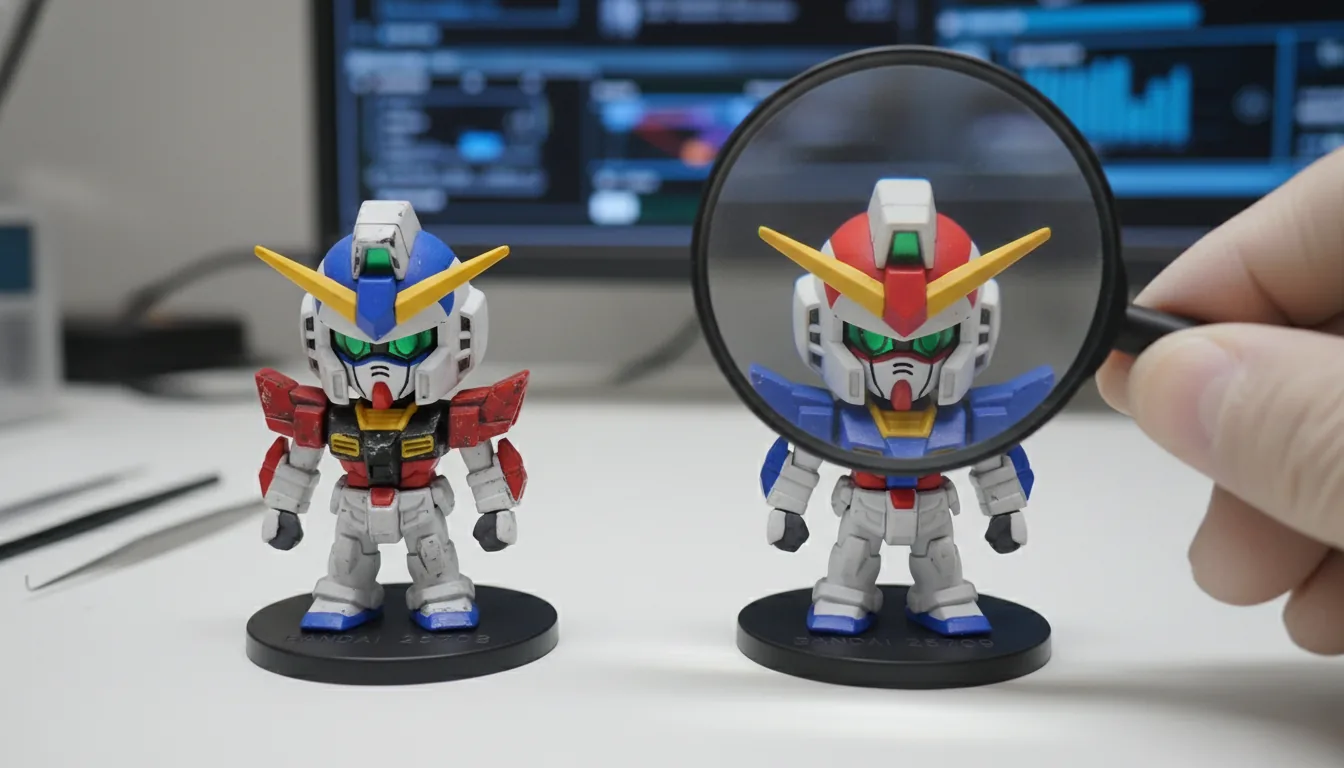
The gashapon market has a counterfeiting problem. As the hobby has grown internationally — with collectors in the US, Europe, and Southeast Asia willing to pay a premium for Japanese capsule toys — bootleg manufacturers have responded with a flood of convincing-looking fakes. Some are obvious: wrong colors, melted details, toxic-smelling plastic. Others are alarmingly good reproductions that require a trained eye to identify.
The consequences of buying fakes go beyond wasted money. Bootleg figures may use lead-based paints, phthalate-heavy plastics, or other materials not safe for display around children. They don't hold resale value. And they fund a criminal industry that harms legitimate Japanese toy manufacturers — studios like Bandai, Kaiyodo, and Takara Tomy that invest years in design, licensing, and quality control.
This guide gives you 12 specific, testable signals to evaluate any gashapon figure for authenticity. We've organized them from most obvious (visible at first glance) to most subtle (requiring closer inspection). Work through the list in order whenever you're evaluating a purchase.
High-risk purchase channels: AliExpress (extremely high fake rate), Amazon third-party sellers (moderate-high), eBay from China-based sellers (high), Wish / Temu (assume all capsule toys are fake). Low-risk: AmiAmi, HobbyLink Japan, official Bandai stores, local Japanese import shops with verified sourcing.
Sign 1: The Price Is Too Good
The most reliable preliminary warning sign. Authentic gashapon figures — even commons — have a floor price that reflects genuine manufacturing costs, licensing fees, and import duties. If you're seeing a "complete set of 6 Dragon Ball gashapon" for $8 shipped from China, you're looking at fakes. Period.
Rough authentic price anchors for reference:
- Single common figure from a current Bandai series: $3–7 USD (retail equivalent)
- Single rare figure: $8–20 USD depending on series and demand
- Complete set of 6 figures: $20–50 USD from legitimate retailers
- Secret rare figure: $15–80+ USD on secondary market
Legitimate sellers occasionally run sales, but you'll rarely see authentic gashapon more than 30–40% below these anchors. If the discount is deeper than that, assume it's fake until proven otherwise.
Sign 2: Paint Application Quality
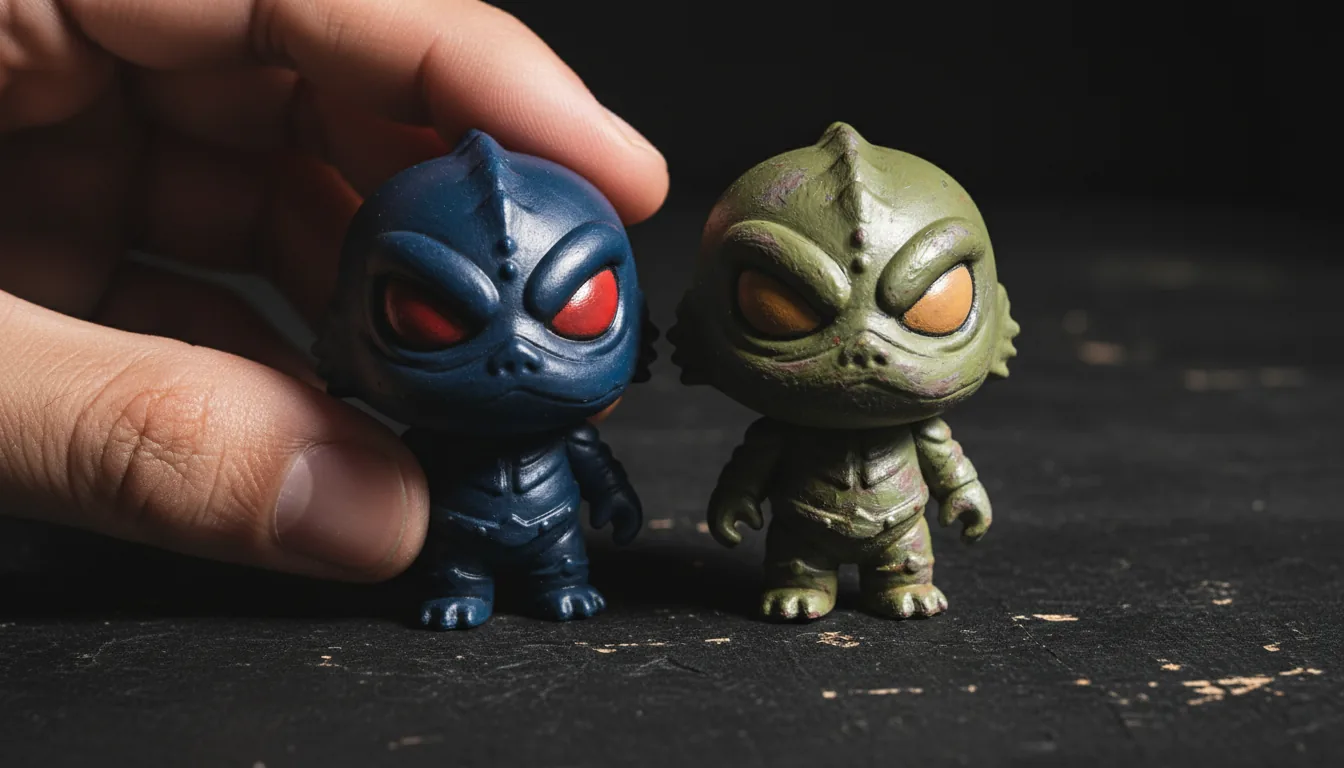
Paint quality is the single most visible differentiator between authentic and fake gashapon. Authentic Bandai figures undergo multi-stage painted-by-machine processes with quality control checks. Fakes use cheaper spray methods with inadequate masking.
What to look for:
- Bleeding — Does the red bleed into the white, or vice versa? On authentic figures, color boundaries are sharp. On fakes, they blur or feather.
- Coverage consistency — Are the colors uniform across the figure, or do you see translucency (underlying plastic color showing through thin paint)?
- Wash/shading accuracy — Many authentic figures have panel-line washes or subtle shading to give depth. Fakes either omit this entirely or apply it sloppily.
- Eye printing — Facial details and eyes are the hardest to replicate accurately. On authentic anime figures, eyes are precisely tampo-printed with multiple layers. On fakes, eyes are often misaligned, blurry, or incorrectly colored.
If you're buying online and can only see seller photos, zoom into the face. Eye quality alone will tell you a great deal about overall authenticity.
Sign 3: Mold Line Visibility and Quality
Every injection-molded plastic figure has mold lines — seams where the two halves of the mold meet. Authentic gashapon manufacturers spend significant engineering time minimizing mold line visibility and locating seams in inconspicuous areas (behind limbs, under hair, along natural body contours). Fakes cut corners here dramatically.
On authentic figures: mold lines are thin, almost invisible, and deliberately routed away from visible surfaces. On fakes: mold lines are thick, obvious, and often run directly across visible surfaces like faces or forearms. You may also see "flash" — thin sheets of excess plastic at the mold seam — which indicates poor manufacturing tolerances.
Sign 4: Logo and Brand Markings
Every authentic Bandai gashapon figure has the Bandai logo stamped or molded somewhere on the figure — usually on the base, underside of a foot, or back of the torso. For other manufacturers: Kaiyodo uses "Kaiyodo" and "©" marks; Takara Tomy A.R.T.S. figures are marked accordingly.
Examine the logo closely:
- Font accuracy — Bandai's logo uses a specific typeface that bootleggers often approximate but rarely nail. Look for inconsistent letterforms, especially in the "B" and the circular shape.
- Molded depth — Authentic logos are molded into the plastic with consistent depth. Fakes often have shallow, muddy logo impressions or simply stenciled/printed text.
- Copyright text — Authentic figures include full copyright notices referencing the IP owner (e.g., "© Shueisha, Toei Animation" for Dragon Ball). Fakes often omit copyright text entirely or include obviously wrong text.
- Country of origin — Authentic Bandai gashapon are manufactured in China or Vietnam but bear full legal markings. "Made in China" on a Bandai figure is correct and expected. What's suspicious is the absence of any country marking.
Sign 5: Capsule Quality and Markings
If you're evaluating gashapon still in their capsules, the capsule itself is informative. Authentic Bandai capsules have specific characteristics:
- Consistent translucency — you can see the general shape of the figure inside but not identify it specifically
- A clean, crisp snap when the two halves are separated
- Bandai capsules are typically marked with "© Bandai" on the interior of one half, in very small text
- The capsule halves fit together with precise tolerances — they should feel solid when closed, not loose or wobbly
Fake capsules are often made from lower-grade polypropylene that feels slightly more brittle or flexible than authentic capsules. The snap-fit is less precise. Interior markings are absent.
Sign 6: Figure Weight and Plastic Feel
Authentic gashapon figures have a specific heft. They use ABS (acrylonitrile butadiene styrene) plastic for structural parts and softer PVC for painted surfaces. Both are high-quality materials with consistent density. Fakes often use cheaper, lighter plastics that feel hollow or flimsy by comparison.
Pick up the figure and assess:
- Does it feel appropriately solid for its size? A 6cm figure should have noticeable weight — enough to feel deliberate, not like a hollow toy.
- Is the plastic surface smooth and consistent, or does it have a slightly textured, almost grainy feel? Authentic high-grade plastic has a very smooth surface finish.
- Does it have any odor? Authentic figures have a minimal plastic smell. Fakes made with cheap plastics often have a sharper, more chemical smell. Some fakes with lead-based paint have an almost metallic smell.
Sign 7: Articulation Points and Joint Quality
Many gashapon figures — particularly in Bandai's HG and Figuarts Mini lines — feature articulated joints. Authentic joints are engineered to specific torque specifications: firm enough to hold a pose, smooth enough to reposition without risk of breakage. Fake joints are almost always inferior.
Test articulated figures by:
- Rotating each joint slowly — it should feel smooth with consistent resistance, not gritty or grinding
- Holding a pose — authentic joints hold position; fake joints either flop or are too stiff (risking breakage when moved)
- Checking for flash or rough edges at the joint interface — authentic figures are clean at all contact points
Sign 8: Decal and Tampo Print Accuracy
Tampo printing — a pad printing method used for precise detail applications — is the technology behind eyes, insignia, small text, and fine details on authentic figures. It's expensive to set up but produces extremely accurate, durable results. Fakes rarely invest in proper tampo printing.
Examine any printed details under magnification (your phone camera zoom works well):
- Are lines crisp and consistent, or slightly pixelated and blurry?
- Is there any visible registration offset — where two colors of a printed element are slightly misaligned?
- Do small text elements (like character name badges or insignia) read as clean text, or do they blur into indistinct marks?
Authentic Bandai tampo printing is remarkably precise even at 1mm scale. Any blurriness or misregistration is a red flag.
Sign 9: Assembly Quality on Multi-Part Figures
Many gashapon figures require assembly from multiple parts. The assembled fit quality reveals manufacturing precision. Authentic figures:
- Have parts that fit together with a satisfying, positive click — no gap, no excessive force needed
- Show no visible gap at joint lines when assembled
- Have consistent alignment — a figure's head should sit straight on its neck peg, accessories should align naturally with hand positions
Fake figures frequently have ill-fitting parts that require force to assemble (risking breakage), leave visible gaps, or have alignment issues that make the assembled figure look off. If an arm pegs in at an obviously wrong angle, or if the head sits crooked, these are assembly tolerance failures typical of bootleg manufacturing.
Sign 10: Instruction Insert and Collector Checklist
Every authentic gashapon series includes a small printed insert inside the capsule. This insert serves two purposes: it shows all figures in the series (helping collectors track what they're missing) and it includes manufacturer information, safety warnings, and legal copyright notices.
Authentic inserts:
- Are printed on white paper with clean, legible text and accurate character artwork
- Include copyright notices from both the manufacturer (Bandai) and the IP holder
- Show the series name consistently with the machine's exterior branding
- Often include Japanese text alongside English, reflecting authentic Japanese production
Fake inserts (if present at all) are often low-resolution photocopies, have wrong or missing copyright text, show different artwork from what's on the figure, or are simply absent entirely.
Sign 11: Series Coherence and Figure Count
Authentic gashapon series have a defined number of figures — typically 5 to 8. Every figure in the series is designed as a coherent set with matching aesthetic quality, scale, and style. Fakes often mix figures from different series, scale them incorrectly, or include figures that simply don't belong to the claimed series.
Before buying a "complete set" online, look up the authentic series on Bandai's website, the Gashapon Bandai website, or collector databases like Myfigurecollection.net. Verify:
- The correct number of figures in the authentic series
- The specific character poses — authentic series document exact poses for each figure
- Color schemes — which colors are correct for which characters in this specific series
Sign 12: Seller Behavior and Sourcing
The seller is as important as the figure. Red flags in seller behavior:
- Ships from China but claims to sell "authentic Bandai Japan" figures — Bandai manufactures in China, but the brand's authorized international distribution doesn't route through random AliExpress sellers
- Prices a full set far below retail — as noted in Sign 1, too-cheap is the first red flag
- Stock photos only, refuses to show actual item — authentic sellers of single figures should be able to show the actual piece
- No return policy — legitimate collectible sellers have return policies; fake sellers disappear or make returns impossible
- "Inspired by" or "similar to" language — a common legal dodge for bootleg sellers that essentially confirms the product is not authentic
Where to Buy Authentic Gashapon
The safest approach: buy from sources with verifiable legitimate sourcing.
Always Safe
- AmiAmi — Japan's most trusted international anime collectible retailer; all stock authentic
- HobbyLink Japan — Reliable alternative to AmiAmi with similar guarantees
- Nin-Nin Game — Specialist in anime collectibles; authentic stock
- Official Bandai Gashapon website (if shipping internationally) — self-explanatory
- Physical Kinokuniya stores — Bookstore chain with authentic Japanese merchandise
Use With Caution
- eBay from Japanese sellers with strong feedback — Generally safe; verify seller location and feedback specifically related to gashapon
- Mercari Japan (via proxy) — Mostly authentic secondhand sales from Japanese collectors; use Buyee or ZenMarket as proxies
- Local anime shops — Quality varies; ask about their sourcing if prices seem off
Avoid
- AliExpress capsule toy listings
- Amazon third-party sellers shipping from China with suspiciously low prices
- Wish, Temu, Shein (assume any collectibles from these platforms are counterfeit)
- eBay sellers based in China selling "authentic" figures at rock-bottom prices
Special Case: Authenticating Labubu and Pop Mart Figures
The authentication principles above apply universally, but Labubu original vs fake deserves its own focus — Pop Mart Labubu figures are currently among the most counterfeited designer toys on the market globally. The combination of extreme demand, high secondary market prices, and limited official supply has made Labubu authentication a critical skill for any collector.
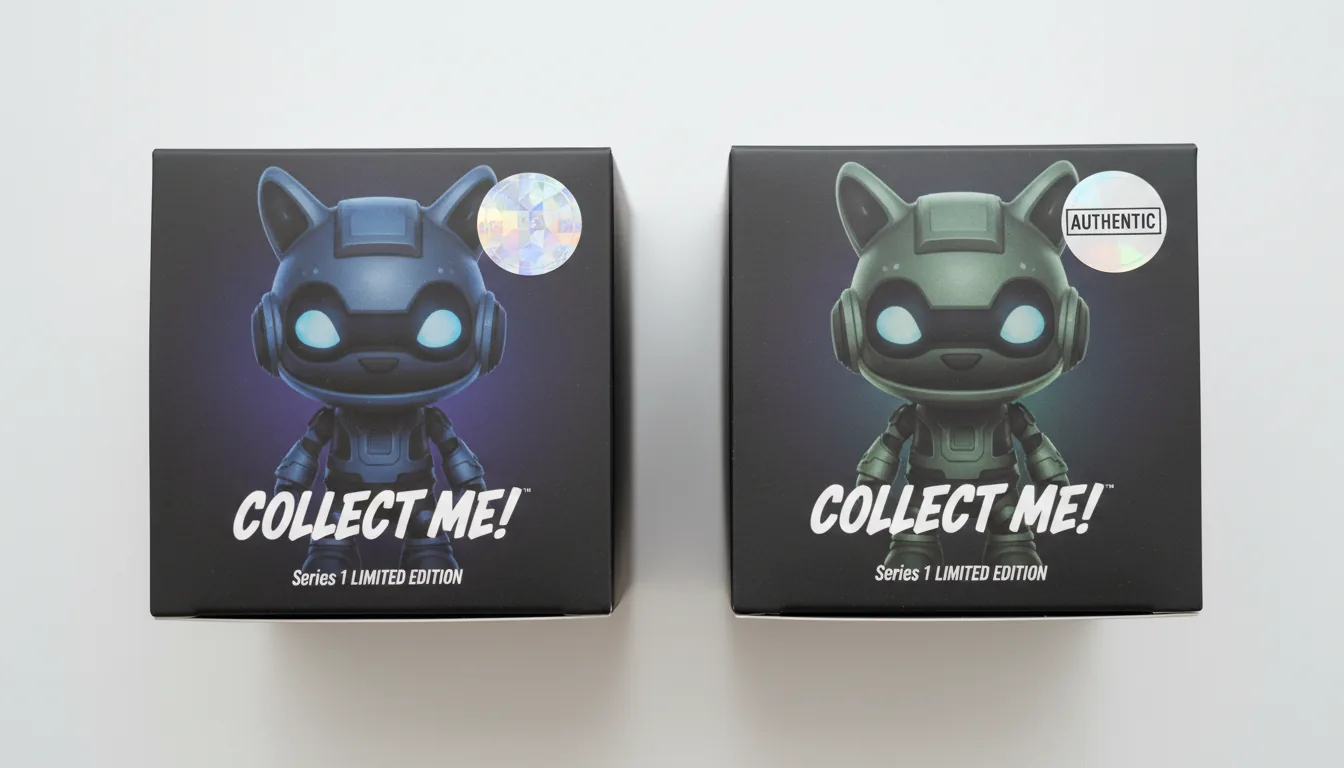
Pop Mart figures differ from Bandai gashapon in key ways that affect authentication. The most important: every genuine Pop Mart product includes a holographic QR authentication sticker on the sealed box. Scan it with the official Pop Mart app — authentic figures return full product details. Counterfeit stickers either don't scan, lead to error pages, or show generic product pages without matching the specific series.
For Labubu plush and soft vinyl formats specifically:
- Ear shape — Genuine Labubu ears have a specific pointed shape with even vinyl thickness. Fakes often have ears that are too rounded, too thin, or asymmetric.
- Teeth detail — Labubu's jagged teeth are one of the most copied and most failed elements. Authentic figures have evenly-spaced, sharp teeth with clean paint separation. Fakes blur the teeth together or paint them inconsistently.
- Tag and dust bag — Genuine Pop Mart Labubu figures include a branded hang tag and dust bag. Fakes omit these or include low-quality facsimiles with wrong fonts or logo proportions.
- Box print quality — Pop Mart boxes are printed at very high resolution with vivid, consistent color. Counterfeit boxes frequently show banding in printed gradients, incorrect pantone values, or blurry text at small sizes.
Only buy Labubu from: the official Pop Mart app or website, Pop Mart physical stores, Pop Mart Robo Shop machines, or StockX (which authenticates all figures before delivery). Never buy from AliExpress, Temu, or third-party Amazon listings for Labubu — the fake rate on those platforms approaches 100% for high-demand series. See our full Labubu buying guide for the complete retail strategy.
What to Do If You Bought a Fake
It happens to everyone at some point. Here's the practical response:
Immediate Steps
- Document everything — photograph the figure and packaging alongside any listings or receipts. You'll need this for any dispute.
- Open a dispute immediately — eBay, PayPal, and credit card companies have buyer protection. On eBay, "item not as described" applies when a fake is sold as authentic. File within the window (eBay gives 30 days from expected delivery).
- Do not throw it away — keep the figure until any dispute is resolved; many platforms require you to return the item.
Getting Your Money Back
eBay's Money Back Guarantee covers counterfeit items. PayPal's buyer protection covers items "significantly not as described," which includes fakes sold as authentic. Credit card chargebacks are a last resort but effective. On AliExpress, the dispute process is more cumbersome but functional — open a dispute, provide photos comparing to authentic figures, and persist.
Report the Seller
After getting your refund, report the seller for counterfeit goods on whatever platform you used. eBay has a specific counterfeit reporting pathway; this is worth doing because enough reports trigger automatic action against sellers.
The r/gashapon and r/AnimeFigures communities maintain running lists of known fake sellers and series that are most commonly counterfeited. Before buying any high-value figure online, search the subreddit for the specific series name plus "fake" — you'll often find direct comparisons from collectors who've received both versions.
Most Commonly Counterfeited Gashapon Series
Some series attract far more counterfeiting than others — typically the most popular and therefore highest-value figures. Extra vigilance when buying these:
- Dragon Ball Super HG Gashapon — Goku, Vegeta, and Gohan figures from the HG line are among the most faked
- One Piece World Collectable Figure — Extremely popular globally; high counterfeit rate on AliExpress and Amazon
- Demon Slayer (Kimetsu no Yaiba) capsule figures — Newer series but already heavily counterfeited due to massive popularity
- Pokémon gashapon sets — Pikachu figures in particular are counterfeited at enormous scale
- Evangelion HG figures — Older series with high collector demand drives active counterfeiting
- Jujutsu Kaisen World Collectable Figure — Post-2023 series that became a counterfeiting target almost immediately upon release
Build Your Collection Authentically
Collecting authentic gashapon is not just about quality — it's about integrity. When you buy genuine Bandai figures, you support the designers, sculptors, painters, and licensors who make the hobby what it is. When you buy fakes, you fund operations that exist specifically to undercut that ecosystem.
The good news is that armed with these 12 signs, you're well-equipped to make confident purchasing decisions. Stick to vetted retailers, know what you're looking at, and don't let an unbelievably low price tempt you into a bad buy.
Ready to build a great collection? Start with our complete beginner's guide to gashapon, explore the 25 best anime series of 2026, and check the most valuable figures guide to know what's worth hunting.