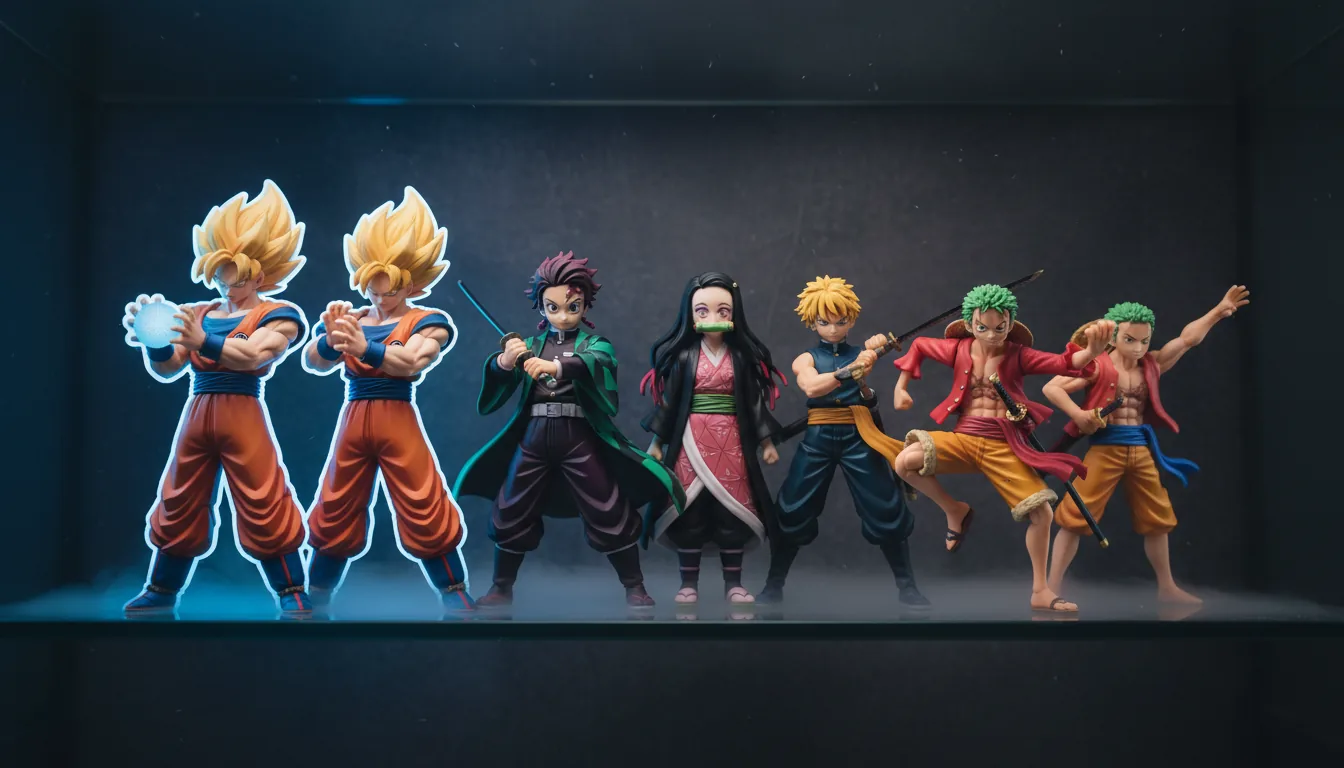
MegaHouse: Background and Bandai Subsidiary Status
MegaHouse Corporation is a wholly owned subsidiary of Bandai Namco Holdings — the same parent company that owns the main Bandai brand. This relationship is central to understanding MegaHouse's market position: they are not an independent company competing against Bandai, but a deliberately differentiated sister brand designed to serve a distinct market segment within the same corporate family.
Founded in 1985, MegaHouse was established to focus specifically on the high-end collectible figure market — a space where the main Bandai brand's mass-market orientation and associated price-point constraints were limitations. By creating a separate subsidiary, Bandai Namco could pursue premium-quality, higher-priced figure products without disrupting the value expectations that consumers had built around the core Bandai brand.
This structural positioning as Bandai's premium arm gives MegaHouse several significant advantages. They have access to the same extraordinary Bandai Namco licensing portfolio — One Piece, Dragon Ball, Sailor Moon, Gundam, and dozens of others — but can pursue those licenses with higher production budgets, more detailed sculpting specifications, and premium material choices that the economics of capsule and standard figure production would not support under the main Bandai brand.
MegaHouse's collector reputation is built on a core proposition: figures that bridge the gap between the affordable capsule toy market and the premium scale figure market. Where a Bandai WCF figure might stand 7cm tall with 4 paint applications, a MegaHouse equivalent might stand 10–12cm with 8–10 paint applications, articulated joints, and a detailed display base. The price point rises accordingly — MegaHouse products typically command 1.5–3x the price of comparable Bandai standard figures — but the quality differential is visible and tangible.
The G.E.M. Series: MegaHouse's Crown Jewel
G.E.M. (Greatest Exquisite Masterpiece) is MegaHouse's flagship premium figure line and represents some of the finest licensed anime figures available at under-¥10,000 retail pricing. Launched in 2010, G.E.M. established a new quality standard for small-scale (approximately 17–24cm) static anime figures that has influenced every Japanese figure manufacturer in the segment.
What makes G.E.M. figures exceptional is the combination of sculptural quality, articulation philosophy, and display engineering. G.E.M. figures are not capsule toys — they are sold in retail packaging at prices of ¥6,000–¥9,000 — but they share the MegaHouse ethos of premium quality at price points designed to be accessible to dedicated fans rather than exclusively to wealthy collectors.
The G.E.M. One Piece series is the most comprehensive, with figures covering the entire Straw Hat crew plus major antagonists across the franchise's story arcs. The G.E.M. Dragon Ball series has produced definitive small-scale versions of Goku, Vegeta, Gohan, Piccolo, and others that are widely considered the best figures of these characters at the sub-¥10,000 price point. The Sailor Moon G.E.M. series — covering all five inner Senshi plus the outer Senshi in premium finish — is a particularly beloved collector set that surfaces regularly at secondary market with strong demand.
Secondary market values for G.E.M. figures have appreciated meaningfully over the decade-plus since the line launched. Early G.E.M. figures in original packaging are 2–5x original retail on secondary markets, driven by the combination of genuine sculptural quality, the prestige of the line's collector reputation, and the straightforward scarcity of discontinued production runs.
MegaHouse Capsule Figure Line
While G.E.M. represents MegaHouse at its premium retail price points, the company also produces capsule-format figures that bring the MegaHouse quality ethos to the ¥500–¥800 vending machine price range. These capsule figures occupy a distinctive niche in the capsule toy market — more expensive than Bandai standard but delivering a visible quality premium that serious collectors recognize immediately.
MegaHouse capsule figures are typically slightly larger than Bandai standard capsule figures (approximately 8–10cm vs 6–8cm) and use a higher number of paint applications. The sculpting tends toward more dynamic poses and greater facial expression accuracy compared to standard capsule offerings. The display bases included with MegaHouse capsule figures are often more elaborate than the simple flat bases common to standard capsule toys.
The trade-off for this quality is availability: MegaHouse capsule releases are less widely distributed through machine networks than Bandai standard products, and retail shelf placement is less comprehensive. International buyers may find specific MegaHouse capsule series harder to source than equivalent Bandai products. However, the quality-to-price ratio for those who do find and purchase MegaHouse capsule figures is exceptionally strong.
Top MegaHouse Licenses
One Piece
MegaHouse's One Piece output is their most extensive and best-known licensing relationship in the figure market. The P.O.P. (Portrait of Pirates) series — technically a MegaHouse product line rather than a capsule format — has been producing One Piece figures since 2004 and has covered essentially every major character in the series across multiple versions, story arc designs, and special editions. P.O.P. figures range from ¥6,000 to ¥30,000+ for special editions and are considered among the finest One Piece static figures produced at any price point.
The P.O.P. collector community is extensive, multi-generational, and highly organized — with dedicated databases tracking every release, version variant, and estimated production run. Older P.O.P. figures in original packaging have appreciated dramatically; early Luffy and Zoro figures from the 2004–2007 production period are now ¥20,000–¥60,000 on secondary markets, representing 5–10x original retail for the most desirable pieces.
Dragon Ball
MegaHouse's Dragon Ball portfolio spans multiple figure lines and price points. The G.E.M. Dragon Ball entries represent accessible premium quality; the Variable Action Heroes line produces highly articulated Dragon Ball figures with extensive accessories and interchangeable parts; and various capsule releases bring Dragon Ball characters to machine-distribution price points. The breadth of approach reflects Dragon Ball's exceptional collector demographic breadth — from children to adults, from casual fans to obsessive completists.
Sailor Moon
The G.E.M. Sailor Moon series is one of MegaHouse's most culturally significant products. Sailor Moon's global fan base — spanning generations from the original 1990s viewers through the Crystal remake's new audience — creates demand for quality figure representations that MegaHouse has consistently met. The inner Senshi G.E.M. set (Sailor Moon, Mercury, Mars, Jupiter, Venus) is considered an essential collection for serious Sailor Moon fans and has maintained strong secondary market demand since initial release.
Gundam
MegaHouse's Gundam output leverages Bandai Namco's core IP in the premium figure space. The G.E.M. Gundam figures apply the line's quality standard to mobile suit character figures rather than the mecha themselves (which are better represented by Gunpla model kits), focusing on the human pilots in their pilot suit designs — a niche that Gunpla building does not address and that creates distinct collector demand.
What Makes MegaHouse Special: Articulation and Display Engineering
MegaHouse's technical differentiators from other figure manufacturers are concentrated in two areas: joint articulation systems and display base engineering.
Articulation Systems
MegaHouse developed proprietary articulation joint systems for several product lines that allow for more natural posing than the simple ball joints used in standard capsule figures. The Variable Action Heroes line in particular uses a multi-point articulation system that allows the figure to achieve dynamic action poses while maintaining proportional fidelity — a technically difficult balance that conventional articulated figures frequently fail.
The design philosophy behind MegaHouse articulation is that joint technology should be invisible in the final figure. Unlike older articulated figures where joints are obvious structural interruptions in the figure's form, MegaHouse hides joints within the figure's anatomy — at armor overlaps, under clothing, within the natural curves of musculature — so that even in articulated poses the figure reads as a coherent sculptural object rather than an engineering device.
Display Base Quality
MegaHouse display bases are consistently more elaborate than industry standard. Where a Bandai WCF or standard capsule figure might include a basic flat base with a character name nameplate, MegaHouse bases often include thematic ground elements, prop accessories, and in some cases multi-figure compatibility that allows several figures from a series to be arranged in narrative relationship with each other.
The P.O.P. series in particular has produced some of the finest display bases in the anime figure market — boat deck sections for the Going Merry and Thousand Sunny ships, environmental elements from memorable story locations, and bases that incorporate additional character miniatures or props that enhance the display composition.
Pricing vs Bandai Standard
The price premium MegaHouse commands over Bandai standard product is real, consistent, and justified by tangible quality differences. Understanding the specific delta helps collectors make informed decisions about where to allocate collecting budget.
Bandai Standard (WCF / Capsule)
- ¥400–¥800 per piece
- 6–8cm scale typical
- 3–5 paint applications
- Basic flat base
- Static pose only
- Widely distributed
MegaHouse Capsule / G.E.M.
- ¥800–¥9,000 per piece
- 8–24cm scale typical
- 8–15 paint applications
- Detailed thematic base
- Articulated options available
- Specialty/limited distribution
The appropriate choice between the two depends entirely on the collector's priorities. For breadth collection — accumulating many different characters across many series — Bandai's accessible pricing and wide distribution makes them the practical choice. For depth collection — acquiring the finest possible representation of beloved characters regardless of cost — MegaHouse's premium output is the clear answer.
Most experienced collectors maintain both approaches simultaneously: core characters they love are represented by the best MegaHouse piece available, while broader collections of secondary characters use Bandai standard product. This tiered approach optimizes both quality (where it matters most) and budget (by not spending premium prices on every piece).
Collector Value Over Time
MegaHouse figures have demonstrated excellent long-term value retention and appreciation, outperforming most other figure manufacturers in the secondary market over time periods of 5+ years. Several factors drive this consistent appreciation:
Quality floor: Because MegaHouse figures are genuinely well-made, they resist the "this looks cheap" assessment that causes lower-quality figures to lose secondary market value. A 2010 P.O.P. Luffy figure looks excellent even compared to modern production — the quality does not date in the way that figures produced at minimum viable quality do.
Limited production runs: MegaHouse does not produce at Bandai volumes. Each figure's production run is smaller, and when those runs are exhausted, no restock occurs for most standard releases. Genuine scarcity drives appreciation in ways that freely reproduced figures cannot achieve.
Franchise endurance: MegaHouse's core licensed properties — One Piece, Dragon Ball, Sailor Moon — are among the most enduringly popular anime franchises in history. As long as these franchises remain culturally relevant (and all signs suggest they will remain so for decades), collector demand for premium figures from these licenses will persist.
P.O.P. completist culture: The Portrait of Pirates collector community practices a completist ethic — they want every release in a coherent set — that creates structural demand for earlier releases as new collectors enter the hobby. Every new One Piece fan who becomes a P.O.P. collector creates demand for all the back-catalog pieces they need to catch up to current production.
Where to Source Rare Older MegaHouse Series
Finding specific older MegaHouse figures, particularly P.O.P. back-catalog pieces, requires a multi-channel approach given their limited original distribution and the active global collector community competing for available stock.
- AmiAmi pre-owned: Regularly carries P.O.P. and G.E.M. figures at below-secondary-market prices in various condition grades. The A/B condition grading system is reliable and photographs of actual stock are provided.
- Mandarake: The definitive source for vintage Japanese collectibles. P.O.P. figures from the 2004–2012 "original period" appear in Mandarake inventory regularly, though premium pricing reflects their rarity.
- Big in Japan (Jungle / Suruga-ya): Japanese used goods retailers with online shops. Competitive pricing on popular pieces, particularly when bought as part of larger collection lots.
- Collector community trading: Facebook groups, Reddit's r/animefigures, and Discord servers dedicated to One Piece and Dragon Ball figure collecting have active trade and sale listings. Community-to-community transactions often offer better prices than retail channels, with the trust benefit of dealing with verified collectors.
- eBay global search: The largest Western secondary market for MegaHouse figures. Prices are typically 20–40% above Japanese market rates but the convenience of domestic shipping (for Western buyers) and buyer protection policies may justify the premium for high-value purchases.
MegaHouse Product Lines Reference Table
| Product Line | License Focus | Scale | Retail Price | Secondary Market | Collector Rating |
|---|---|---|---|---|---|
| P.O.P. (Portrait of Pirates) | One Piece | 1/8 (approx.) | ¥6,000–¥15,000 | 2–10x retail | ★★★★★ |
| G.E.M. Series (One Piece) | One Piece | 17–20cm | ¥6,000–¥9,000 | 1.5–3x retail | ★★★★★ |
| G.E.M. Series (Dragon Ball) | Dragon Ball | 17–20cm | ¥6,000–¥9,000 | 1.5–3x retail | ★★★★★ |
| G.E.M. Series (Sailor Moon) | Sailor Moon | 17–20cm | ¥7,000–¥10,000 | 2–5x retail | ★★★★★ |
| Variable Action Heroes | Various anime | 17cm | ¥4,000–¥7,000 | 1–2x retail | ★★★★☆ |
| MegaHouse Capsule Figures | Various | 8–10cm | ¥600–¥800 | 1.5–4x retail | ★★★★☆ |
| Excellent Model (One Piece) | One Piece | Various | ¥6,000–¥12,000 | 1.5–5x retail | ★★★★☆ |
| Capsule Chara (chibi format) | Various | 5–6cm | ¥500 | 1–2x retail | ★★★☆☆ |
Starting a MegaHouse Collection: Practical Advice
Beginning a MegaHouse collection requires more intentional planning than starting with Bandai standard capsule figures, given the higher per-piece investment and more limited availability of specific releases. Here is how experienced collectors approach the starting phase.
Choose Your Anchor Property First
Before purchasing anything, identify the one franchise that you want at MegaHouse quality level. One Piece P.O.P. collectors, Sailor Moon G.E.M. collectors, and Dragon Ball G.E.M. collectors are all pursuing very different subcollections despite being within the same brand umbrella. Your anchor property determines your entire collecting trajectory — which series to prioritize, which secondary market channels to monitor, which figures represent must-buys vs nice-to-haves.
Research Before You Buy
MegaHouse releases the same character in multiple different versions across years of production. Luffy, for example, has appeared in dozens of P.O.P. and G.E.M. releases across different story arc designs, special colorways, and collaboration editions. Knowing which version of a character is considered the best representation of that character in the collector community prevents you from buying a middling version when a superior one exists at a comparable or lower price.
Condition Matters More at Higher Price Points
At Bandai standard prices ($5–$15), minor paint scuffs or display wear are tolerable. At MegaHouse prices ($50–$300+), condition is a primary value determinant. Always purchase MegaHouse figures in original packaging with all accessories when possible, and inspect secondhand purchases carefully before committing. Box condition matters less than figure condition, but both affect value.
Track Pre-Orders
MegaHouse's most desirable releases often have pre-order windows that close months before production. Collectors who miss pre-orders face secondary market premiums — sometimes significant ones — for popular pieces. Following MegaHouse's official social media accounts, subscribing to AmiAmi new-release newsletters, and participating in the collector community on Reddit and Discord keeps you informed of upcoming releases in time to pre-order.
MegaHouse represents one of the most reliable quality propositions in the Japanese figure market. The combination of premium design standards, enduring licensed properties, and demonstrated secondary market appreciation make their core product lines — P.O.P. and G.E.M. in particular — excellent foundation investments for any serious anime figure collector. The higher entry cost versus standard capsule toys is an investment in objects that will still look excellent and hold value years from now, making MegaHouse the right choice when quality and longevity matter more than quantity.